


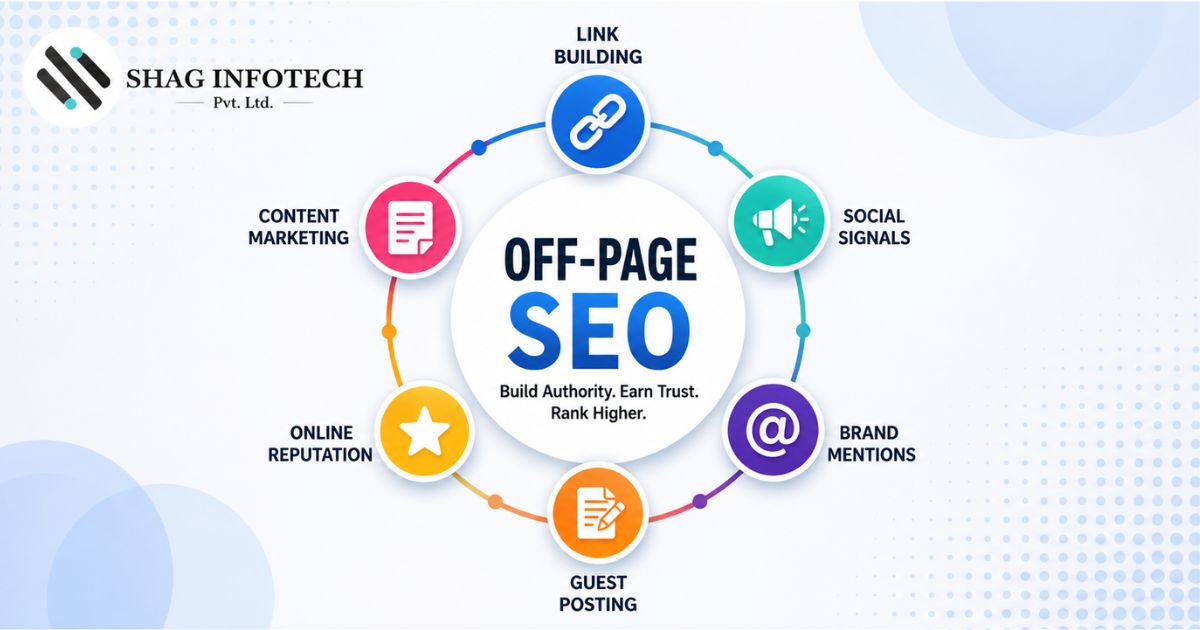
Not only do the content and technical architecture of a website affect search engine ranking results; other signals are considered as well, and these include backlinks, brand mentions, reputation on the web, and appropriate third party references.
This is when Off-Page SEO techniques start playing their role, since an effective off-page marketing campaign will help to create authority for a website, get referral traffic, build up good links, and increase the web presence.
But efficient off-page optimization does not mean having as many links as you can. The most important thing here is quality, relevancy, trust, and consistency. Sometimes a single link from a good and relevant source is worth many links from other sources.
Key Takeaways
- Quality and relevance matter more than backlink quantity.
- Digital PR can generate both visibility and authoritative mentions.
- Guest contributions work best when they provide genuine value.
- Social platforms can increase content discovery and brand awareness.
- Local citations are important for location-based businesses.
- Broken-link and unlinked-mention campaigns can create natural opportunities.
- Avoid paid, manipulative, automated, or irrelevant link schemes.
- Track referral traffic, backlinks, rankings, conversions, and brand visibility.
What Is Off-Page SEO?
Off-page SEO is the set of activities carried out externally from your own website to increase the website’s authority, reputation, visibility, and discoverability. Such activities may include obtaining backlinks, digital PR, brand mentions, local citations, partnerships, and even content promotion.
Unlike title tag changes and page speed optimisation, off-page SEO relies significantly on the reaction of other websites, publications, communities, and audiences to your brand.
Top 15 Off-Page SEO Techniques
15 ways of building high-quality backlinks that can help increase website authority and rankings and generate organic traffic.
- Build High-Quality, Relevant Backlinks
The best link building tactic involves seeking links from sites that are relevant, credible, and useful for your audience. The element of relevance must take precedence over pursuing links solely based on the strength of the website’s domain.
Produce valuable content that will give publishers a need to cite. Original research, valuable guides, statistics, tools, case studies, and expert opinion could help generate more links.
Practical tip: Examine the links that are directing traffic to your competitors’ sites and find gaps you can exploit.
2. Use Guest Posting Strategically
The Guest Posting technique will allow companies to reach a relevant audience and get mentions of their articles from industry sites. However, the goal is not to publish the same article on hundreds of websites.
It is better to select relevant websites and write an article that will bring real value to their audience.
Thus, a guest posting article should be informative and provide links only when it is really necessary.
Best approach: Focus on relevance to industry, editorial considerations, true audience, and originality.
3. Strengthen Digital PR and Media Outreach
Through PR activity online, visibility can be created via news articles, experts speaking on various topics, interviews, trade publications, and original research.
PR campaigns can send pitches to journalists providing useful information such as data, expert opinion, case study analysis, industry observations, or even comments on recent industry changes.
PR activities can bring more than just backlinks; they can give your brand exposure, traffic referrals, build credibility, and create new chances for visitors to find your site.
Example: The security company can engage in research on new threats and make its experts available to journalists for their opinions.
4. Promote Content Through Social Media
Social media marketing can help achieve off-page visibility through promotion of helpful content.
Social media is not only about publishing links. Utilise social media to spark discussions, make your own contributions, become a part of conversations, and engage with other creators and professionals.
The more helpful content gets noticed, the higher the chances for visits, mentions, shares, and even editorial coverage.
Tip: Customise your promotional messages for each platform instead of reusing the same one across all platforms.
5. Build a Strong Brand Mention Strategy
Not all valuable external signals need to be backlinks. Companies should look out for mentions of the brand, products, managers, and other assets on the web.
Identify mentions that occur when a website is talking about your company without linking to a proper page. In such cases, you can get in touch with the website and mention the right sources when needed.
It is especially useful for companies that have already created an online presence.
6. Improve Local Citations and Business Profiles
Consistency in business information within reliable directories and websites can be beneficial for businesses targeting specific cities and geographic regions.
Ensure that your business information, such as business name, physical address, telephone number, website URL, and category, is accurate and consistent.
Customer reviews also add to the reputation of the business online in general.
An Off-Page SEO Checklist is available that businesses can use to consistently evaluate citations, profiles, reviews, and other off-page local signals.
7. Recover Broken Backlinks
Websites often modify their URLs, delete some pages, and/or reorganise their content structure. Such actions may lead to important backlinks being directed to broken pages.
Use backlink analysis software to determine which external sites link to obsolete URLs on your website.
When you have an appropriate landing page, let the publisher know about it.
It is good to know that you have something to build on because there is an existing relationship between the referring website and the content.
8. Reclaim Unlinked Brand Mentions
Unlinked brand mentions might be missed chances for growth. Look for those occasions when websites, blogs, newspapers, or industry-related media have mentioned your brand, but not linked to your website.
If the mention is relevant and the source is cooperative, ask for an inbound link from your most relevant supporting webpage.
The request itself must be helpful rather than forceful. Publishers will be more apt to reply if the recommended link really helps the reader.
9. Create Link-Worthy Original Research
Conducting original research is one of the most effective methods for generating editorial mentions.
Rather than just producing another ordinary piece of content, conduct surveys, gather customer information, do industry research, analyse internal data, or even use public information.
Showcase the results in graphical, numerical form, in analysis by experts, or in downloadable form.
For other writers who require evidence for their articles, doing original research could be a natural way forward.
Example: An agency can produce a yearly report on the search trends within small businesses.
10. Participate in Relevant Industry Communities
Professional circles, discussion forums, and specialised forums can assist businesses in creating connections and establishing expertise.
The objective is never to drop in promotional links where there is no relevance.
Respond to questions, add relevant information, and link back to your website only if it adds value.
Community involvement can lead to referral traffic and increased brand awareness even in the absence of SEO value flowing through the link.
11. Develop Resource Page Outreach
Many sites have resource pages that list useful tools, guides, organisations, or educational materials.
Find resource pages related to your content and see if your page deserves to be there.
Finally, contact them with a brief message stating why your resource is valuable to their readers.
It is most effective when the content stands out and is not just another commercial landing page.
12. Use Competitor Backlink Research
The analysis of competitors’ backlinks can help you identify websites, media, partners, and types of content which have managed to attract attention in your market segment.
You can use any SEO checker or backlink analysis tool to analyse referring domains, link texts, linked pages, and competitor content.
Never blindly follow the links of your competitors. You need to check their relevancy and editorial nature.
It becomes a list that you can use to search for prospects for your campaigns.
13. Build Relationships With Industry Experts
SEO is all about networking too. Network with experts in your niche, publishing professionals, journalists, creators, complementary businesses, and organisations in your sector.
Such connections could result in interviews, collaborations, guest posts, podcasts, webinars, citations, and editorial contributions.
An authentic relationship is always going to be more lasting than sending generic emails to sites with which you have no connection whatsoever.
14. Invest in Broken-Link and Resource Outreach Together
The combination of multiple strategies will help increase the efficiency of the campaign.
It is possible that during the process of researching broken links, you will come across resource pages and outdated information sources.
Create a prospect database containing:
- Website and contact information
- Relevant page
- Existing link or mention
- Recommended replacement resource
- Outreach date
- Response status
- Follow-up date
That makes off-page efforts into a marketing process rather than sporadic link building.
15. Strengthen Your Overall Digital Reputation
Finally, the method is much wider than link building. Companies should create a consistent online identity on websites, publications, professional portals, groups, review websites, and social networks.
A good reputation provides many more reasons for people to believe in your brand before even visiting your website.
This is especially true of companies operating in the commercial field with a lot of competition. Your website should have a support system of references and good experiences behind it.
Comparison of Major Off-Page Strategies
| Technique | Primary Goal | Best For | Difficulty |
| Backlink outreach | Earn authoritative links | Most businesses | Medium |
| Guest contributions | Reach new audiences | B2B and specialist brands | Medium |
| Digital PR | Visibility and authority | Established brands | High |
| Brand mentions | Reputation and references | Growing businesses | Medium |
| Local citations | Local visibility | Local businesses | Low |
| Original research | Earn editorial links | Agencies and publishers | High |
| Competitor analysis | Discover opportunities | SEO teams | Medium |
| Community participation | Trust and referral traffic | Niche businesses | Medium |
| Broken-link recovery | Reclaim existing opportunities | Established websites | Medium |
Off-Page SEO Checklist
Before undertaking any off-page promotion, check the following:
- Identify your most important commercial and informational pages.
- Analyse competitors and their referring domains.
- Remove or evaluate suspicious backlink patterns.
- Create link-worthy assets.
- Build a relevant outreach prospect list.
- Personalise outreach emails.
- Track earned backlinks.
- Monitor unlinked brand mentions.
- Maintain accurate local business profiles.
- Monitor referral traffic and conversions.
- Review new and lost backlinks regularly.
- Measure results against business goals.
The Importance of SEO for Business is more obvious when these activities are associated with actual results rather than vanity measurements.
Best Practices for Sustainable Results
Off-Page Optimisation should be based on the quality principle.
Prioritize Relevance
Relevant websites that actually have an audience may be worth more than large websites that have nothing to do with your topic.
Earn Links Through Value
Generate assets that publishers will really want to cite.
Diversify Acquisition Channels
Don’t rely solely on one tactic. Use PR, partnerships, content promotion, community, and editorial outreach.
Measure Business Outcomes
Measure more than just backlink numbers. Google Analytics will give you information on sources of acquisition, referrals, and user behaviour across different platforms. The Traffic Acquisition report can help companies see where their sessions come from.
Keep Quality Under Control
In the search ecosystem created by Google, valuable and trustworthy content is valued, and manipulative link-building is not. Therefore, off-page tactics need to centre on creating actual editorial value.
Common Off-Page SEO Mistakes
Do not do this when creating credibility:
- Buying large quantities of low-quality backlinks.
- Using irrelevant directories only for links.
- Publishing the same guest article repeatedly.
- Automating forum comments and profile links.
- Using keyword-heavy anchor text unnaturally.
- Ignoring the relevance of referring websites.
- Measuring success only through domain authority metrics.
- Sending generic mass outreach emails.
- Focusing on links while ignoring brand reputation.
- Expecting immediate ranking improvements from every link.
Quality control needs to be a part of every campaign.
Practical Example: Local Service Business
Think of an IT firm in Jaipur that is targeting its services through search engines.
Rather than spending efforts in getting thousands of cheap directory links, the firm should think of creating an industry report of its own, writing some good articles in tech magazines, participating in business networks within the city, getting quality business citations, and forming business alliances with complementary tech firms.
This digital marketing company in jaipur can thus analyse which outside factors lead to quality visits, inquiries, and brand searches.
The important thing here is that a growing firm does not just want links but an external reputation too.
A business can also consider an seo company in Jaipur where structured competitor analysis, outreach, backlink monitoring and reporting are needed.
For bigger campaigns, the choice of the best seo agency in India must include consideration of its methodology, reporting process, quality of links, experience and ability to integrate SEO actions with the business results.
FAQs
1. What are Off-Page SEO Techniques?
Off-Page SEO Techniques refer to those actions taken outside of the website to enhance the site’s reputation and authority. Some of the popular techniques include backlinking, digital PR, guest blogging, mentions, and content outreach.
2. Which off-page strategy is most effective?
There is not one approach that is equally effective across every site. Backlinks, original research, digital PR, partnerships, and brand mentions that are high in quality can be used to generate authority in an ongoing way when appropriate for the business.
3. Does social media directly improve Google rankings?
Social media can lead to greater exposure, awareness, engagement, and backlinks. Although social signals are not supposed to be used as a direct ranking factor, social signals can be helpful in overall marketing strategies and thus provide opportunities for mentions and backlinks.
4. How can I build backlinks safely?
Provide valuable content, find appropriate publishers, customise your approach, provide value with your knowledge, and search for actual editorial opportunities. Do not resort to spammy, automated link networks, bulk submissions, and other practices aimed at nothing but affecting your rankings.
5. What should an Off-Page SEO strategy measure?
Track the number of referring domains, the quality and relevance of backlinks, referral traffic, organic visibility, branded search, conversions, leads, and revenue, if you can. Examining business results gives a much clearer view than looking only at backlinks.
6. Is link building still important for SEO?
Yes, getting relevant and authoritative links is still an important part of establishing authority online. But the practice of getting links should be seen as just one part of your SEO efforts.
7. How long does off-page SEO take to show results?
The results will differ depending on competition, website authority, content quality, industry, and the nature of the action being done. Certain campaigns may be able to bring in referral traffic right away, while others may need time to improve organic search visibility.
8. Can small businesses use off-page SEO?
Yes. For small businesses, starting with local citations, collaborations, expert contributions, helpful materials, community engagement, reviews from customers, and outreach will do. It is important to concentrate on those chances which are practical for the given budget and resources.
Conclusion
Off-page optimisation means establishing your credibility outside your website. Successful off-page optimisation combines various elements including relevant backlinks, useful content, digital PR, brand mentions, communities, partnerships, and reputation management. For businesses like Shag Infotech, building a strong online presence through these activities can help strengthen brand visibility and authority over time.
Off-page optimisation does not mean manipulating search engines by providing them with a lot of backlinks. Rather, it means creating actual incentives for other people and organisations to refer to and talk about your brand.
Consistent application of Off-Page SEO techniques and linking them with the results of your business operations can lead to successful off-page optimisation.