

A simple website can become a dependable business resource that helps build visibility, credibility, and long-term growth. For a small business, startup, entrepreneur, or growing company, a professionally designed website is often the first place where potential customers interact with the brand. With the right Website development services, businesses can create a functional, user-friendly, and professional online presence that supports their goals and delivers a better experience to visitors.
The website is not just a simple online brochure anymore. Potential customers can use the website to understand what you offer, compare your service with other options available, give reviews, ask for information, purchase products from the website, or contact you.
A professionally created website can form the technical backbone of this interaction while providing businesses with better control over their online presence.
Key Takeaways
- A professional website can strengthen brand credibility.
- Better navigation helps visitors find important information faster.
- Mobile-friendly design is essential for users across different devices.
- A technically sound website provides a stronger foundation for SEO.
- Custom functionality can support unique business requirements.
- Website security helps protect business and customer information.
- Faster websites can create a better user experience.
- Professional development can make future updates and expansion easier.
- A website should support measurable business goals rather than simply look attractive.
What Are Professional Website Development Services?
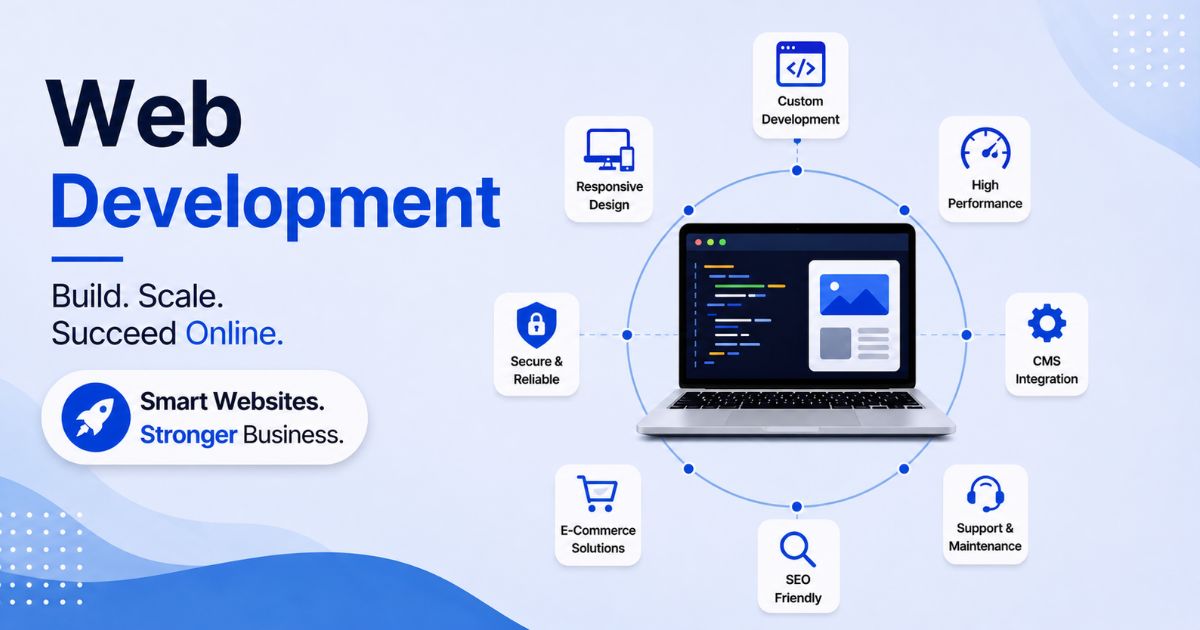
Website development service comprise the steps of planning, designing, development, testing, deployment, and maintenance of websites based on the requirements of the business. The development may consist of front-end, back-end, database integration, security, optimisation, mobile responsiveness, and maintenance.
Based on the nature of the project, the website development service includes:
- Website architecture
- UI/UX implementation
- Front-end development
- Back-end development
- CMS integration
- E-commerce functionality
- API integrations
- Database development
- Security implementation
- Performance optimisation
- Analytics integration
- Ongoing maintenance
The goal is to have a website that serves its purpose efficiently for both the site’s users and the company running the site.
10 Reasons Your Business Needs Professional Website Development
Professional website development services can provide businesses with a more robust digital foundation through the integration of design, functionality, speed, security, and scalability. An effectively developed website can assist in developing credibility, marketing activities, client relations, and creating room for business growth.
1. Build Stronger Brand Credibility
The professional website can determine how the customer views the business. Professionalism in terms of structure, branding, accuracy, and functionality can help create a trustworthy initial impression.
Customers generally use the website as a gauge in determining whether the business seems to be established enough to meet their needs.
Professional websites should be able to convey:
- What the business offers
- Who it serves
- Why customers should consider it
- How customers can get in touch
- Where the business operates
- What makes the brand different
An unattractive website could negatively impact the reputation of even the most reputable businesses.
2. Create a Better User Experience
The site should facilitate the completion of tasks intended by the visitor. Professional web design emphasises navigation, page structure, content hierarchy, interaction design, and usability.
Consider a service-oriented company that wants its visitors to proceed smoothly from:
Homepage → Service → Benefits → Proof → Contact
Should the visitors fail to get hold of any vital information or have trouble understanding what comes next, they could just walk away without bothering to contact the organisation.
Professional development will aid in designing clear navigation and compelling calls to action.
3. Deliver a Mobile-Friendly Experience
Websites can be accessed through smartphones, tablets, laptops, and desktops. Responsive Website Development is a technique which makes websites more adaptive to changes in screen sizes.
A good responsive website should make sure that:
- Text remains readable
- Navigation works on smaller screens
- Buttons are easy to tap
- Images fit the screen
- Forms remain usable
- Important information is not hidden
Mobile compatibility is especially important for businesses that get their clients from search engines, social networking, local directories, and paid advertising.
4. Improve Your SEO Foundation
An aesthetically pleasing website alone is not enough to rank high in search results. There are many elements that need to be considered apart from the design to improve search visibility.
Professional development may help in building a better technical base for SEO.
Developers can consider:
- Clean URL structures
- Proper heading hierarchy
- Page speed
- Mobile compatibility
- Structured data
- Crawlability
- Indexation
- Image optimisation
- Canonicalisation
- XML sitemaps
SEO must be thought about during the development process instead of only after the site is launched.
5. Support Custom Business Requirements
Each business will have its own process. A normal website might not serve the purpose of a developing business.
Custom Website Development can be applied if a business wants functionality based on its unique needs.
Examples include:
- Customer portals
- Booking systems
- Membership areas
- Product configurators
- Online calculators
- Internal dashboards
- Custom forms
- API integrations
- Automated workflows
A real estate firm will require features such as a property search tool with detailed filters, an enquiry form, agent profiles, and geolocation listings.
With custom development, the site can be designed to fit those needs rather than the business having to alter its process.
6. Increase Website Performance
Website speed influences the user experience and can affect whether users stay on a page or not.
Professional web developers can recognise performance issues related to:
- Large images
- Unnecessary scripts
- Poorly configured hosting
- Excessive third-party tools
- Inefficient code
- Database queries
- Caching
- Unoptimised assets
Performance tuning is something that should be done regularly and as part of the development process, and not just once.
7. Strengthen Website Security
A business website may include customer data, contacts, usernames and passwords, transactions, or other sensitive information. Security should always be an important concern right from the beginning.
This can be addressed through professional development, for example:
- Secure authentication
- Access controls
- Input validation
- HTTPS
- Secure coding practices
- Regular software updates
- Backup procedures
- Monitoring
Depending on the website and the data that is being managed, security needs will change. The requirements for securing a simple brochure website are different from those of an e-commerce website.
8. Make Marketing More Effective
The website is usually the key endpoint for many digital marketing efforts. SEO, social media, email marketing, pay-per-click marketing, and content marketing all usually take users to websites.
Professional Web Development Services is able to design these landing pages and conversion paths for marketing purposes.
For example:
Google Search → Service Page → Enquiry Form → CRM → Sales Team
As long as the website is connected to analytics and other business tools, it will be easier for marketers to know which campaigns generate inquiries and conversions.
9. Prepare Your Business for Future Growth
As your business grows, your website requirements will evolve. Your business might require new services, locations, languages, products, integrations, users, or marketing capabilities.
A scalable website design is more flexible when it comes to such changes.
An expanding business could end up upgrading from:
Simple Website → Service Platform → Customer Portal → Integrated Business System
Considering future requirements while developing an application could help save money in the future by avoiding redevelopment.
10. Turn Your Website Into a Business Asset
The most important advantage of professional development is that the website will be able to act as a functional tool within the business process.
A well-planned website can support:
- Lead generation
- E-commerce
- Customer service
- Appointment bookings
- Content distribution
- Product discovery
- Customer education
- Data collection
- Brand communication
The web page must therefore be judged in terms of business results rather than just aesthetics.
Professional Website vs DIY Website
Both approaches can prove to be viable in certain situations. Which is more suitable depends on the business goals, technical requirements, financials, and growth plans.
| Factor | Professional Website | DIY Website |
| Design flexibility | High | Usually template-based |
| Custom functionality | Extensive | Often limited |
| Technical optimisation | Specialist-led | User-dependent |
| Scalability | Can be planned | Depends on platform |
| Integrations | Customisable | Depends on available tools |
| Security management | Professionally implemented | Often platform-dependent |
| SEO foundation | Can be built into development | Depends on platform and setup |
| Initial investment | Higher | Usually lower |
| Ongoing control | High | Varies |
A small website with low technical requirements could do quite well when developed by oneself, while others may require professional development for the success of their business goals and growth plans.
Signs Your Business Needs a New Website
Your existing website might require professional assistance if:
- It is not mobile-friendly.
- Visitors struggle to find information.
- Pages load slowly.
- The design looks outdated.
- Important business functions are handled manually.
- Your website generates very few enquiries.
- It is difficult to update content.
- Your site has recurring technical problems.
- It does not integrate with your marketing or business tools.
- Your business has outgrown its current platform.
When several of the above issues exist, it might prove more beneficial to rebuild or upgrade the site rather than just implementing cosmetic changes.
How to Select the Right Website Development Company
The selection of a Website Development Company must not only be limited to a review of their portfolio design. Consider their technical abilities, development process, communication process, maintenance process, and understanding of your needs as a client.
Check the Development Portfolio
Consider projects that have similar functions, industry needs, or business model.
Ask About Technology
Learn what CMS, frameworks, database management systems, host environments, and third-party tools are recommended by the agency.
Discuss Ownership
Clarify ownership of:
- Source code
- Domain
- Hosting
- Design assets
- Content
- Third-party accounts
- Analytics accounts
Understand Post-Launch Support
Determine if the organisation offers updates, bug fixes, security assistance, backup, monitoring, and future development.
Best Practices for Professional Website Development
A good development project should go through a proper process:
1. Define Business Objectives
Understand the purpose of the site.
For example:
- Generate leads
- Sell products
- Increase bookings
- Provide customer support
- Build brand visibility
2. Understand the Audience
Identify needs, search patterns, objections, and barriers to conversion.
3. Plan the Information Architecture
Design the page structure before coding starts.
4. Design for Multiple Devices
Implement and test the user experience on all the required screens.
5. Integrate Analytics
Ensure measurement is done properly to monitor all the necessary tasks.
6. Test Before Launch
Conduct tests for forms, links, navigation, performance, mobile usability, security, integrations, and browser compatibility.
7. Maintain After Launch
Websites need constant monitoring and updating because of the changes in technology and business needs.
Common Website Development Mistakes
Firms may be able to reduce unnecessary expenses through early recognition of the common problems associated with website development.
- Starting development without clear goals.
- Focusing only on visual design.
- Ignoring mobile users.
- Adding unnecessary features.
- Forgetting SEO during development.
- Using oversized images and unoptimised assets.
- Not testing forms and conversion paths.
- Ignoring website security.
- Failing to configure analytics correctly.
- Launching without a maintenance plan.
Practical Examples
Small Local Business
A local company offering home services might require an uncomplicated website with service pages, geographical details, client testimonials, contact forms, and call-to-action capabilities.
Professional development will ensure that the website is user-friendly and provides a good basis for local searches.
Growing E-Commerce Business
The online store may require product filters, a payment gateway, inventory synchronisation, customer accounts, and analytics.
The scalability of the architecture becomes more crucial when the product portfolio grows and so does the customer base.
Startup
For example, the startup will probably start by having a website that explains what the product is about, captures leads, and validates demand. With growth, it may require customer accounts, dashboards, subscriptions, or integration capabilities.
The architectural design should avoid complications at this stage but be open to future possibilities.
Conclusion
Professional website development services can help you create a solid digital base for your business for establishing credibility, engaging customers, marketing efforts, generating leads, and overall growth. In general, an effective website has to be a combination of useful content, proper navigation, good design and performance, required security, optimised structure for search engines, and functionality aligned with business needs.
It’s not about making your website nice and visually attractive only. It’s about creating a digital resource that will help you achieve your business goals and develop further.
For those companies that want professional web development along with other digital services, Shag Infotech can help to create business-oriented websites.
FAQs
1. What are website development services?
Website development services include technical planning, design creation, programming, testing, deployment, integration, and maintenance of a website. Services depend on the nature of the project and can include CMS development, e-commerce, custom functionality, API development, security, and optimisation.
2. Why should a small business invest in professional website development?
A professional website will assist a small business in building its credibility, providing relevant information, creating enquiries, improving SEO presence, and delivering a better experience to prospective customers. This investment must match the business’s real needs and objectives.
3. How much does professional website development cost?
The price depends on the number of pages to develop, design specifications, functionality, integrations, CMS and frameworks to use, e-commerce capabilities, content needs, testing, and support services. Simple business websites require fewer development efforts compared to complex web applications.
4. Is custom website development worth it?
Custom development is a good choice for businesses that need some particular functionality, integrations, workflow, or control that a standard website builder does not offer. Custom development is not necessarily required by all businesses.
5. How long does website development take?
The development time frame depends on the size of the project, preparedness of the content, design difficulty, functionality, integrations, revision cycles, and testing needs. The development cycle of a small business website will be much shorter compared to complex e-commerce platforms and web applications.