

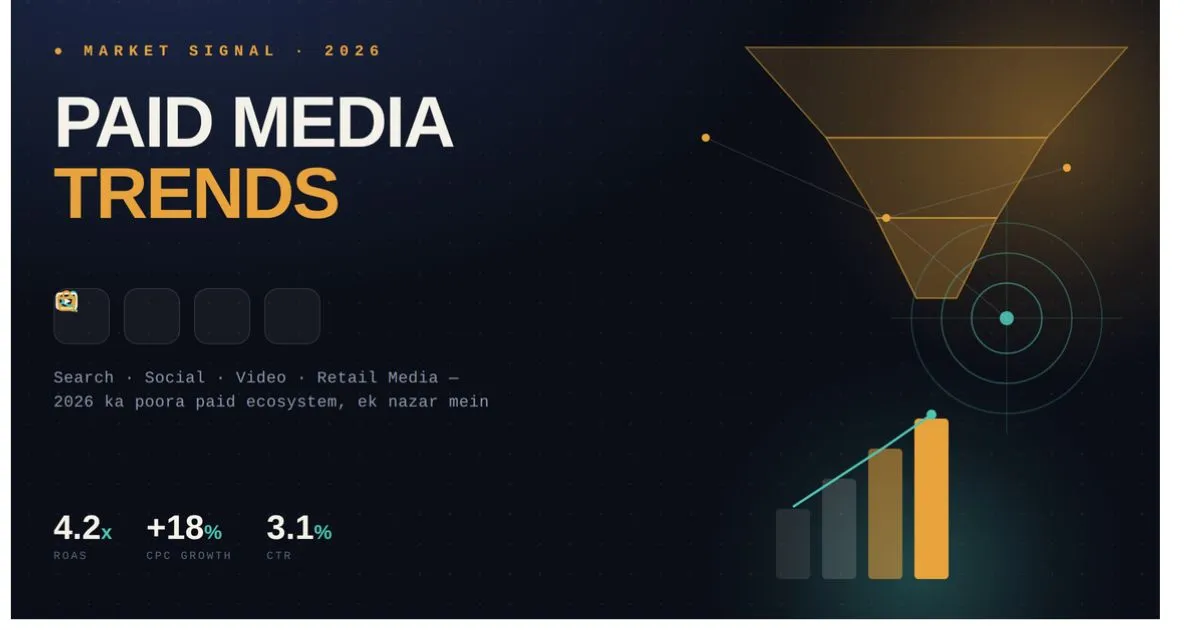
Digital advertising is progressing faster now than ever, and companies failing to keep up can hardly preserve their campaign efficiency. The newest Paid Media Trends change the way businesses interact with customers, manage budgets, and make conversions thanks to more advanced technologies and analytical tools. Instead of sticking to conventional advertising techniques, marketing specialists are now concentrating on automation, audience understanding, and the actual results of their actions .
Whether you are a PPC Manager, a Performance Marketing Manager, or a Marketing Director, you cannot afford not to know the specifics of those changes in order to stay ahead of your competitors.
Nowadays, an efficient approach to advertising strategy is impossible without considering many things, not just spending more money on ads. It requires finding proper platforms, audience, and optimization of campaigns according to their efficiency.
Key Takeaways
- Paid Media Trends are revolutionizing digital advertising using AI, automation, and effective audience targeting.
- Campaign strategies that are structured will be important for businesses to maximize their return on investment.
- Automation and performance measurement are critical factors for successful campaigns.
- Data-driven optimization will lead to efficient customer acquisition and digital advertisements.
- Continuous testing is required by marketers to keep up with consumer trends.
Table of Contents
- What Are Paid Media Trends?
- Why Paid Media Matters in 2026
- Benefits of Modern Paid Media
- Latest Paid Media Trends
- Building an Effective Paid Media Strategy
- Paid Media vs Organic Marketing
- EEAT Best Practices
- Expert Insights
- Industry Statistics
- Best Practices
- Common Mistakes
- Case Study
- FAQs
- Conclusion
What Are Paid Media Trends?
Paid Media Trends represent the most recent innovations, advancements in technology, and strategies that aid companies in optimizing their paid advertisement campaigns online. Paid Media Trends affect how businesses target their customers, budget, optimize campaigns, and analyze their performance metrics.
The modern-day advertising world is becoming more and more analytical. Businesses today don’t just run campaigns manually; instead, they leverage audience data, automation, and performance analytics to inform their actions.
A successful Paid Media Strategy is one where the advertising campaign is aligned with company goals, customer behaviors, and relevant platforms.
Why Paid Media Is More Important Than Ever
There is a need for modernized advertising practices in business due to continued development in customer behavior, digitalization, and regulation of customer privacy. Keeping up with industry trends ensures the maximum performance of advertising practices by companies while minimizing marketing expenses.
In today’s world, customers undergo a complicated process where they use several digital sources before making their purchase decisions. Customers search online, compare goods, watch videos, and interact with brands using several platforms. Such an intricate process demands that businesses provide customers with personalized experience in advertising.
The adoption of the Paid Media Marketing strategy helps businesses to target their customers in a proper way. Businesses do not have to use their advertising efforts on a wide range of customers; instead, they should pay attention to those people who are more likely to become clients.
In case a company runs several campaigns, cooperation with an experienced digital advertising agency will be helpful.
The Shift Toward Smarter Advertising
Current paid advertising trends are shifting from the traditional method of manual campaign management towards intelligent automation and optimization. This allows organizations to get ahead of their competitors due to quicker decision-making and efficient campaigns.
Several factors are driving this transformation:
- Increased use of artificial intelligence in advertising platforms.
- Better audience targeting through first-party data.
- Automation for bidding and budget optimization.
- Greater focus on measurable business outcomes.
- Privacy-first advertising practices are replacing third-party cookie dependence.
All these trends have brought about a change in the way advertisers plan and run their campaigns.
Expert Insight
Modern advertisers have moved away from basing their campaigns’ success on impressions and clicks. They have started assessing the success of their campaigns based on how well they perform within the business, for example, by generating qualified leads, the cost of acquiring customers, conversion rate, and revenue growth.
Benefits of Modern Paid Media
Modern paid media allows companies to target the correct audience, enhance efficiency in campaigns, and create business outcomes through data-driven decision-making. As opposed to wide targeting, advertisers can optimize every step of the consumer’s journey through the use of technology and audience information.
Some of the biggest benefits include:
- Improves campaign precision through audience segmentation.
- Reduces wasted advertising spend with better targeting.
- Increases lead quality and conversion opportunities.
- Delivers measurable performance through real-time reporting.
- Supports continuous campaign optimization for long-term growth.
Businesses that regularly review campaign data are better equipped to adapt to changing customer behavior and market conditions.
Latest Paid Media Trends to Watch in 2026
The new trends in Paid Media include automation, privacy-focused advertising, artificial intelligence optimization, and first-party data usage. Companies that take advantage of these innovations are more likely to boost their campaign success and ROI.
Smart advertising platforms are gaining popularity. Machine learning can now be used to optimize the bids, find the target audience, and enhance campaign results without the need for constant human involvement.
A customer-first approach to advertising includes using consent-based data gathering and privacy-sensitive targeting tactics. This allows companies to build trust and stay effective at the same time.
Cross-channel campaign management is another trending topic in the digital marketing industry. Instead of managing separate platforms, companies design campaigns that deliver unified messaging through search, social media, and display platforms.
Building an Effective Paid Media Strategy
For a successful Paid Media Strategy to be developed, there has to be clearly defined business goals, an understanding of the target audience, and optimization of campaigns. All decisions on advertising should be based on business goals and not on metrics of performance alone.
An effective strategy should include:
Define Campaign Objectives
Identify whether the campaign focuses on brand awareness, lead generation, website traffic, or sales growth.
Understand Audience Behavior
Study customer interests, demographics, search intent, and online behavior before launching campaigns.
Allocate Budget Strategically
Distribute advertising budgets based on platform performance instead of dividing budgets equally across channels.
Measure Campaign Performance
Use reliable analytics to evaluate campaign success and improve future decision-making.
The Growing Importance of Paid Search Marketing
Search advertising continues to be a powerful tool for digital marketing since it targets people who are actively searching for products or services.
A well-optimized Paid Search Marketing campaign allows companies to reach consumers at a crucial time when they have the intention to buy. It can therefore yield higher-quality leads than traditional advertising campaigns.
Successful search campaigns focus on:
- High-intent keywords.
- Relevant ad copy.
- Optimized landing pages.
- Smart bidding strategies.
- Continuous keyword refinement.
Businesses that regularly optimize search campaigns often achieve better advertising efficiency and stronger conversion rates.
Why Paid Social Media Advertising Continues to Grow
The platforms serve businesses as a means for reaching their audience by creating personalized and visually attractive advertising experience for them.
The modern form of paid social media advertising enables marketers to target the audience based on demographics, interests, purchase history, and behavior.
Benefits include:
- Improved audience segmentation.
- Higher engagement opportunities.
- Stronger brand visibility.
- Better remarketing capabilities.
- Flexible campaign objectives.
As social platforms introduce more AI-powered advertising features, marketers can create increasingly personalized customer experiences.
Performance Marketing: A Results-Driven Approach
Businesses today are becoming more focused on Performance Marketing since all advertising choices must align with the goals that the company has.
Performance marketing is different from traditional marketing since performance marketing requires accountability. The campaigns are optimized for metrics other than impressions.
This approach enables businesses to:
- Improve marketing efficiency.
- Reduce acquisition costs.
- Increase conversion rates.
- Scale successful campaigns faster.
- Make informed investment decisions.
Organizations working with an experienced performance marketing agency often benefit from advanced optimization techniques and deeper campaign analysis.
Smarter Media Buying in 2026
Modern Media Buying leverages automation, audience intelligence, and data analysis to buy advertising inventories better than conventional techniques do.
Current-day advertisers apply artificial intelligence-based bidding solutions that make budget adjustments based on the performance of a particular ad campaign.
Effective media buying includes:
- Audience targeting.
- Platform selection.
- Budget optimization.
- Bid management.
- Campaign monitoring.
By continuously analyzing campaign data, businesses can improve advertising efficiency while reducing unnecessary spending.
Comparison Table: Traditional vs Modern Paid Media
| Feature | Traditional Paid Advertising | Modern Paid Advertising |
| Targeting | Broad Audience | Precision Audience Targeting |
| Optimization | Manual | AI-Assisted Optimization |
| Budget Management | Fixed Allocation | Dynamic Budget Optimization |
| Reporting | Basic Metrics | Real-Time Analytics |
| Decision Making | Historical Data | Predictive Insights |
| Customer Experience | Generic Messaging | Personalized Advertising |
EEAT: Building Trust Through Modern Paid Media
Effective advertising campaigns should be based on experience, expertise, authority, and trustworthiness (EEAT). Firms that emphasize transparency, accurate data, and customer value always have superior marketing results.
To strengthen EEAT:
- Share real campaign insights.
- Base decisions on verified performance data.
- Avoid unrealistic advertising promises.
- Review campaign performance regularly.
- Continuously improve customer experiences.
Expert Insight
The most effective advertisers do not add to their budgets whenever there is a problem with performance. Rather, they study how the audience behaves, work on the quality of creatives, and improve targeting and bidding before adding to advertising costs.
Industry Insight
Marketing research keeps revealing that those companies that utilize AI for automation, targeting of audiences, and optimization usually demonstrate better advertising effectiveness than those companies that operate manually. The more digital marketing advances, the more relevant the integration of technologies with strategic decisions becomes.
Google Ads Trends Shaping Paid Media in 2026
AI, Automation, and privacy-first advertising are some of the emerging Google Ads trends in today’s world. Advertisers who keep themselves informed about these trends can help themselves save time while utilizing their advertising budget effectively.
Some of the most important trends include:
- AI-powered Smart Bidding.
- Performance Max campaign improvements.
- First-party audience targeting.
- Predictive audience insights.
- Enhanced reporting dashboards.
- Better creative asset optimization.
Businesses should regularly review platform updates and adjust campaigns accordingly to remain competitive.
PPC Best Practices for Better Campaign Performance
Following proven PPC Best Practices helps advertisers reduce wasted spend, improve click-through rates, and increase conversion opportunities. Consistent optimization delivers stronger long-term campaign performance than one-time adjustments.
Consider these best practices:
- Define measurable campaign goals.
- Use highly relevant keywords.
- Write compelling ad copy.
- Test multiple ad variations.
- Improve Quality Score.
- Optimize landing pages.
- Review campaign data weekly.
- Adjust bids based on performance.
Small improvements made consistently often produce better long-term results than major changes made infrequently.
Strengthening Campaigns with Google Ads Management
Professional Google Ads management ensures campaigns remain optimized through continuous monitoring, testing, and strategic improvements. Successful advertisers regularly review campaign performance instead of allowing campaigns to run without optimization.
Effective campaign management includes:
- Budget monitoring.
- Keyword optimization.
- Audience refinement.
- Ad testing.
- Negative keyword management.
- Performance reporting.
Regular optimization helps improve efficiency while reducing unnecessary advertising costs.
Creating an Effective Advertising Strategy
Every successful advertising strategy begins with clearly defined business goals, audience research, and measurable performance indicators. Advertising should always support broader business objectives rather than focusing only on clicks or impressions.
An effective strategy should answer:
- Who is the target audience?
- Which platforms deliver the highest ROI?
- What business objective should the campaign achieve?
- Which metrics define success?
- How will campaign performance be measured?
Businesses that align advertising with overall business goals often achieve stronger long-term growth.
The Role of Advertising Automation Tools
Modern advertising automation tools simplify campaign management by reducing manual work while improving optimization through artificial intelligence and machine learning.
Automation helps marketers:
- Optimize bidding automatically.
- Adjust campaign budgets.
- Improve audience targeting.
- Schedule advertisements efficiently.
- Generate performance recommendations.
- Save valuable management time.
Rather than replacing marketers, automation allows teams to focus on strategy, creativity, and business growth.
Why Conversion Tracking Is Essential
Accurate conversion tracking enables businesses to measure campaign effectiveness and understand which advertising activities generate real business value.
Without reliable tracking, advertisers may invest in campaigns that produce clicks but fail to generate meaningful business outcomes.
Businesses should monitor:
- Lead submissions.
- Phone calls.
- Online purchases.
- Form completions.
- Newsletter registrations.
- Revenue generated.
Reliable tracking supports smarter decision-making and better campaign optimization.
Improving Results Through Ad Campaign Optimization
Continuous ad campaign optimization helps businesses improve advertising performance by analyzing campaign data and making informed adjustments over time.
Optimization activities include:
- Refining audience targeting.
- Testing ad creatives.
- Updating keywords.
- Improving landing page experience.
- Adjusting bidding strategies.
- Reviewing campaign performance regularly.
Optimization should be an ongoing process rather than a one-time task.
Best Practices for Modern Paid Media
Organizations looking to improve advertising performance should follow these recommendations:
- Build campaigns around clear business objectives.
- Understand customer intent before launching advertisements.
- Monitor campaign performance regularly.
- Test multiple creative variations.
- Optimize budgets using performance data.
- Use automation where appropriate.
- Update campaigns based on platform changes.
- Focus on business outcomes instead of vanity metrics.
Common Mistakes to Avoid
Many advertisers reduce campaign performance by making avoidable mistakes.
Common mistakes include:
- Ignoring audience research.
- Choosing broad keywords without intent.
- Failing to monitor campaigns regularly.
- Sending traffic to poorly optimized landing pages.
- Measuring clicks instead of conversions.
- Avoiding A/B testing.
- Not reviewing performance reports.
Avoiding these mistakes creates a stronger foundation for long-term advertising success.
Real-World Business Example
A software firm specializing in B2B had problems with lead generation even after raising its advertising budget every quarter.
In contrast to simply raising their budget, they refined targeting, started measuring conversions, optimized their landing pages, and used automated bidding.
In a few months’ time, they were able to reduce costs and raise the quality of leads since decisions about advertising were made based on actual performance data.
It is clear that in some cases, optimization will yield more successful outcomes than merely spending more on advertising.
Decision Checklist
Before launching your next campaign, ask yourself:
- Have campaign goals been clearly defined?
- Is audience research complete?
- Are landing pages optimized?
- Is conversion tracking configured correctly?
- Have multiple ad variations been tested?
- Is campaign performance reviewed regularly?
Frequently Asked Questions
1. What Are Paid Media Trends and Why Do They Matter?
Paid media trends refer to the latest advertising strategies, technologies, and best practices that help businesses improve campaign performance and maximize return on investment.
2. How Can Businesses Improve Paid Advertising Performance?
Businesses can improve advertising performance by optimizing targeting, testing creatives, monitoring key metrics, and using automation to refine campaigns continuously.
3. Which Paid Media Metrics Should You Track?
The most important metrics include ROAS, click-through rate (CTR), conversion rate, customer acquisition cost (CAC), and return on ad spend.
4. Is Paid Media Worth It for Small Businesses?
Yes. With the right audience targeting, budget management, and campaign optimization, paid media can help small businesses generate qualified leads and measurable growth.
5. How Often Should You Optimize Paid Media Campaigns?
Review campaign performance at least once a week and make ongoing optimizations based on conversion data, audience behavior, and advertising goals.
6. Which Advertising Innovations Will Drive Better Results in 2026?
Businesses are expected to benefit from AI-powered automation, first-party data strategies, privacy-first advertising, and advanced campaign optimization.
Conclusion
The future of digital advertising will depend upon more intelligent technologies, better data privacy policies, and consistent optimization. Companies that keep up with the ever-evolving trends in Paid Media will have an upper hand in optimizing their campaigns and cutting costs of acquisition while ensuring business sustainability.
Success is no longer about pouring money into advertising. It is about making the right plans, measuring the results accurately, automating, and continuously optimizing them. This is where Paid Media Trends can prove their worth to marketers who seek competitive advantages for their campaigns.
Shag Infotech provides the right services to companies to help them develop paid media strategies that are driven by data and are optimized for performance.