

Achieving higher rankings on Google is no longer just about publishing content or adding keywords to your pages. Modern SEO requires a technically optimized website that offers an excellent user experience while making it easy for search engines to crawl, understand, and index your content.
Many businesses invest heavily in SEO, content marketing, and backlink building but still struggle to improve their rankings. In most cases, the issue isn’t the marketing strategy; it’s the technical health of the website.
Problems such as crawl errors, broken links, duplicate content, slow-loading pages, poor site architecture, or indexing issues can prevent even high-quality websites from reaching their full potential. A professional Technical SEO Audit Service helps identify and fix these issues before they impact your search rankings.
Because these technical problems often remain hidden, website owners may not notice them until their organic traffic starts declining.
This is where a Technical SEO Audit becomes essential.
A comprehensive technical SEO audit identifies the issues affecting your website’s search performance and provides a clear roadmap for improving visibility, user experience, and organic rankings.
In this guide, you’ll learn how technical SEO audits work, what they include, and why they are an important part of every successful SEO strategy.
What is a Technical SEO Audit?
A Technical SEO Audit is a detailed evaluation of your website’s technical structure to identify issues that may be limiting its performance in search engines. Instead of focusing only on keywords or content, a technical audit examines the behind-the-scenes elements that influence crawling, indexing, page experience, and overall website health.
The primary objective of a technical SEO audit is to discover problems that prevent search engines from properly accessing and understanding your website. Once these issues are identified, they can be fixed to improve visibility in search results and provide a better experience for visitors.
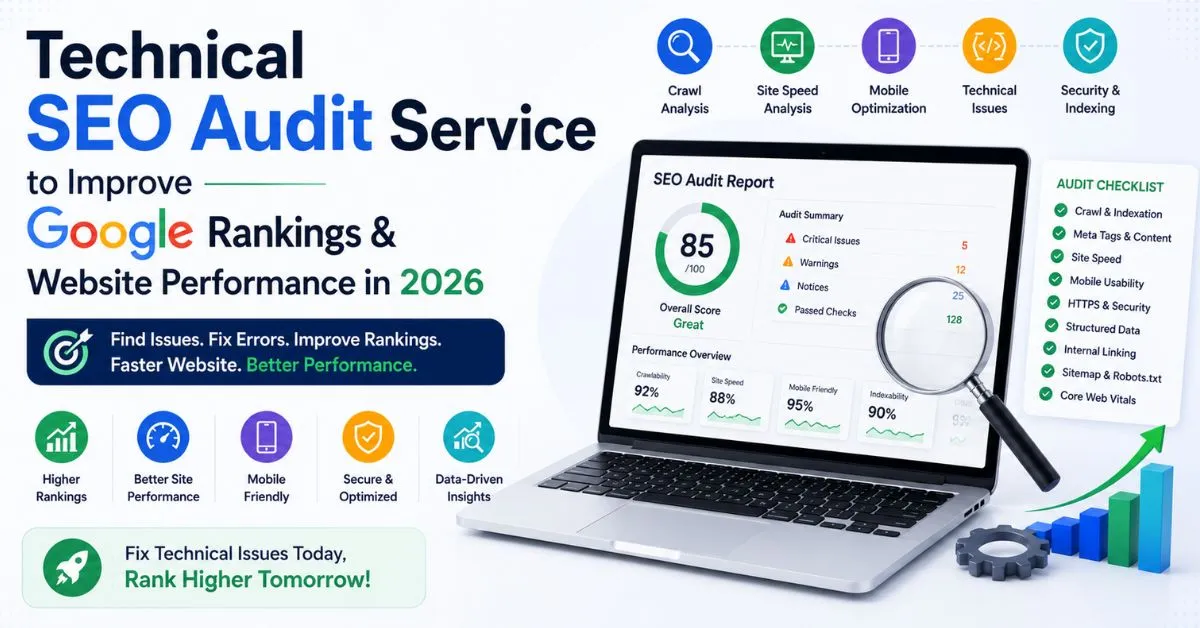
A professional technical SEO audit typically reviews several important areas, including:
- Website crawlability
- Indexing status
- Internal linking
- Site architecture
- Page speed
- Mobile usability
- Structured data
- Security (HTTPS)
- Core Web Vitals
- Duplicate content
- XML sitemaps
- Robots.txt configuration
The audit doesn’t simply generate a report filled with technical data. Experienced SEO professionals analyze the findings, prioritize critical issues, and recommend practical solutions that can improve your website’s performance.
Many SEO agencies also help implement these recommendations, ensuring that technical errors are corrected according to Google’s latest best practices.
Whether you manage a small business website, an eCommerce store , or a large enterprise platform, conducting regular technical SEO audits helps maintain a healthy website and supports long-term organic growth.
How Does an SEO Technical Audit Work?
An SEO Technical Audit begins with a complete crawl of your website using professional auditing tools. These tools collect detailed information about every page, helping SEO specialists identify technical errors that may not be visible during a normal website review.
The collected data is then analyzed to understand how search engines interact with your website and where improvements are needed.
Professional SEO experts usually combine multiple tools because each one provides different insights into your website’s technical performance.
Some of the most commonly used tools include:
- Google Analytics (GA4)
- Google Search Console (GSC)
- Screaming Frog SEO Spider
- Sitebulb
- Semrush Site Audit
- Ahrefs Site Audit
- DeepCrawl
- OnCrawl
- JetOctopus
- PageSpeed Insights
- GTmetrix
These tools help SEO specialists evaluate critical areas such as:
- Crawl errors
- Indexing issues
- Broken pages
- Redirect chains
- Duplicate content
- Canonical tags
- Internal linking
- Website speed
- Mobile usability
- Core Web Vitals
- Structured data errors
- Security issues
Once the website scan is complete, the audit findings are organized into a detailed report.
Rather than simply listing technical problems, experienced SEO professionals categorize issues based on their priority and potential impact on search rankings. Critical problems that directly affect crawling, indexing, or user experience are usually addressed first, followed by optimization opportunities that improve overall website performance.
A high-quality technical SEO audit also includes practical recommendations, allowing businesses to understand exactly what needs to be fixed and how those improvements can contribute to better rankings, increased organic traffic, and stronger search visibility.
What’s Included in a Technical SEO Audit Service?
A professional Technical SEO Audit is much more than a simple website scan. It is a comprehensive evaluation of your website’s technical health, identifying issues that may affect search engine crawling, indexing, user experience, and overall SEO performance.
The purpose of an audit is not only to discover technical problems but also to provide clear recommendations for improving your website according to Google’s latest ranking guidelines.
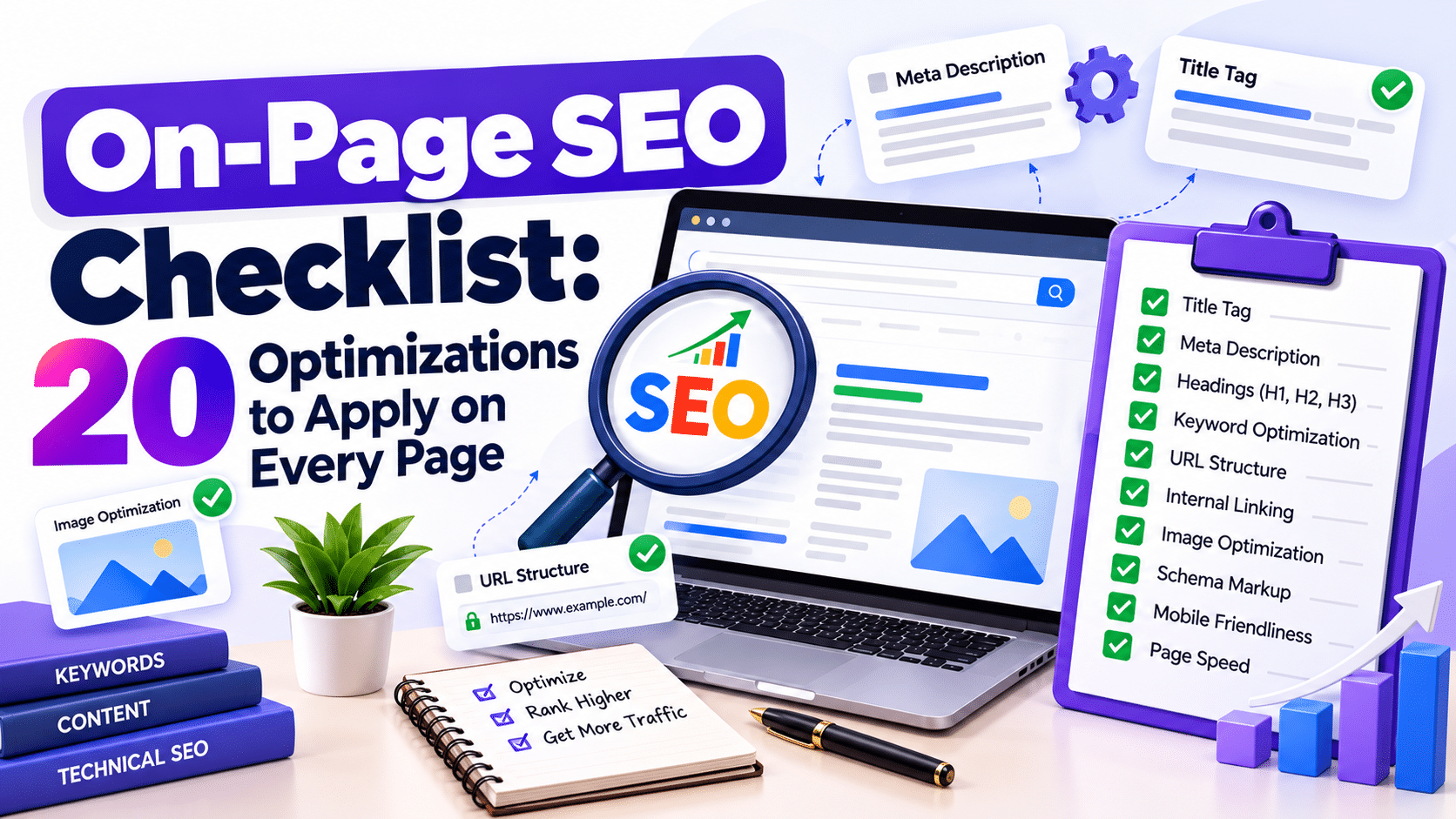
A complete technical SEO audit generally covers several important areas, including on-page optimization, technical website structure, crawlability, page speed, backlinks, local SEO, and performance analysis.
Below are the major sections included in a comprehensive Technical SEO Audit Service.
General On-Page Analysis
General On-Page Analysis focuses on elements that directly affect how search engines understand your website’s content. Although these issues are easier to fix than technical server-related problems, they still play a significant role in improving search visibility and user experience.
A detailed on-page review usually includes the following factors:
Duplicate Content
Duplicate content occurs when identical or very similar content appears on multiple URLs within the same website. This can confuse search engines and make it difficult for them to determine which page should rank in search results.
An SEO audit identifies duplicate pages and recommends solutions such as:
- Canonical tags
- Proper URL structure
- Content consolidation
- Redirect implementation
Reducing duplicate content helps improve crawl efficiency and strengthens page authority.
Hreflang Tags
If your website serves users in different countries or languages, implementing hreflang tags is essential.
These tags tell search engines which language or regional version of a page should be displayed to specific users, helping eliminate duplicate content issues across international websites while improving user experience.
Image Alt Text
Search engines cannot interpret images the same way humans do. Alt text helps describe image content, making it easier for search engines to understand what each image represents.
A technical SEO audit checks whether:
- Images include descriptive alt attributes
- Alt text is relevant to the page content
- Keywords are used naturally
- Decorative images avoid unnecessary optimization
Proper image optimization can also improve visibility in Google Images search.
Keyword Optimization
Modern SEO is no longer about repeating the same keyword multiple times.
Instead, search engines evaluate whether content is written naturally and covers the topic comprehensively.
An audit reviews:
- Keyword placement
- Keyword relevance
- Semantic keywords
- Topic coverage
- Over-optimization issues
The objective is to create content that satisfies both users and search engines.
Meta Descriptions
Meta descriptions play an important role in increasing click-through rates from search engine results.
During an audit, SEO specialists check whether each page has:
- A unique meta description
- Appropriate character length
- Relevant keywords
- Clear user-focused messaging
- Strong call-to-action
Optimized meta descriptions can encourage more users to click on your website.
Meta Titles
Title tags remain one of the strongest on-page SEO signals.
A technical audit reviews every page to ensure title tags are:
- Unique
- Descriptive
- Within the recommended length
- Optimized with target keywords
- Written to improve search visibility
Well-written titles improve both rankings and click-through rates.
Schema Markup
Structured data, also known as Schema Markup, helps search engines better understand your website content.
An audit checks whether structured data is correctly implemented and validates it for errors.
Common schema types include:
- Organization
- Local Business
- FAQ
- Article
- Product
- Review
- Breadcrumb
- Service
Proper schema implementation increases the chances of earning rich search results.
Thin Content
Pages with limited or low-value information often struggle to perform well in search results.
A technical SEO audit identifies pages that require additional content, better optimization, or consolidation with other pages.
Improving thin content enhances topical authority and provides greater value to visitors.
URL Structure
Clean and organized URLs help both users and search engines understand page topics.
An SEO audit evaluates whether URLs are:
- Short and descriptive
- Easy to read
- HTTPS secured
- Keyword optimized
- Free from unnecessary parameters
- Consistent across the website
Proper URL optimization improves crawlability and user experience.
Technical On-Site Analysis
Technical On-Site Analysis examines the backend structure of your website to ensure search engines can efficiently crawl, index, and understand your pages.
Unlike basic on-page SEO, this section focuses on technical configurations that directly influence website performance.
Website Structure & Architecture
A logical website structure allows search engines to discover pages more efficiently while helping users navigate your website easily.
During the audit, SEO specialists review:
- Category hierarchy
- Internal linking
- Topic clusters
- Crawl depth
- Orphan pages
- Broken internal links
A well-organized architecture improves crawl efficiency and distributes page authority throughout the website.
Website Navigation
Simple and intuitive navigation improves both usability and SEO.
The audit evaluates whether important pages are easily accessible through menus, categories, and internal links while reducing unnecessary navigation complexity.
Breadcrumb Navigation
Breadcrumbs provide users and search engines with a clear understanding of page hierarchy.
An audit checks whether breadcrumb navigation is properly implemented and marked up with structured data for enhanced search visibility.
Click Depth
Click depth refers to the number of clicks required to reach a page from the homepage.
Important pages should generally be accessible within three clicks whenever possible.
Reducing click depth improves crawl efficiency and increases the likelihood of pages being indexed.
WWW vs Non-WWW
A technical SEO audit verifies whether your website consistently uses either the WWW or the non-WWW version.
Proper canonicalization prevents duplicate indexing issues and ensures all authority is consolidated into a single preferred domain.
Robots.txt
The robots.txt file controls which sections of your website search engines are allowed to crawl.
SEO specialists review this file to ensure important pages remain accessible while unnecessary resources are blocked from indexing.
XML Sitemap
An XML sitemap helps search engines discover your website pages more efficiently.
During the audit, specialists verify:
- Sitemap availability
- Proper formatting
- Indexable URLs
- Automatic updates
- Search Console submission
A properly configured sitemap improves crawling and indexing efficiency.
URL Rewriting
SEO-friendly URLs improve readability and make page topics easier to understand.
Technical audits identify dynamic or poorly structured URLs and recommend cleaner permalink structures wherever necessary.
HTTPS Security
Website security has become an important ranking factor.
A technical SEO audit verifies SSL implementation and checks whether all website pages load securely without mixed-content warnings.
Redirect Analysis
Redirect errors can waste crawl budget and negatively impact user experience.
The audit reviews:
- Broken redirects
- Redirect chains
- Redirect loops
- Incorrect 301 and 302 usage
Fixing redirect issues helps preserve link equity and improves website performance.
.htaccess Configuration
For websites running on Apache servers, the .htaccess file controls many important SEO-related settings.
An audit may review configurations related to:
- URL redirects
- HTTPS enforcement
- Caching
- Error handling
- Compression
Correct configuration helps improve both website security and loading performance.
Log File Analysis
A Log File Analysis is one of the most advanced parts of a Technical SEO Audit. Every time a visitor or search engine bot accesses your website, the web server records that activity in a log file. By analyzing these records, SEO specialists can understand how search engines crawl your website and identify technical issues that may affect indexing and rankings.
Unlike standard SEO tools , log files provide real-world crawl data directly from your server, making them extremely valuable for diagnosing hidden SEO problems.
Below are the key elements reviewed during a log file analysis.
Bot Activity
Search engine bots continuously crawl websites to discover new and updated content. A technical SEO audit examines bot activity to understand how efficiently search engines are crawling your pages.
The analysis helps identify:
- Googlebot crawl frequency
- Crawl budget usage
- Blocked pages
- Frequently crawled URLs
- Unnecessary crawl activity
- Suspicious bot traffic
Understanding crawler behavior helps optimize website performance and ensures important pages receive adequate attention from search engines.
HTTP Status Codes
Status codes indicate how your server responds when users or search engines request a page.
A technical audit identifies problematic responses such as:
- 404 Not Found
- 500 Internal Server Errors
- Redirect issues
- Soft 404 pages
- Broken URLs
Resolving these errors improves user experience while helping search engines crawl your website more efficiently.
Most and Least Crawled Pages
Not every page on a website receives the same level of attention from search engines.
A log file audit identifies:
- Frequently crawled pages
- Rarely crawled pages
- Newly discovered pages
- Ignored URLs
This information helps SEO professionals understand whether important pages are being prioritized correctly and whether crawl budget is being used effectively.
Page Speed Optimization
Website speed is a critical ranking factor and directly impacts user experience. Visitors expect pages to load quickly, and even a slight delay can increase bounce rates and reduce conversions.
A Technical SEO Audit evaluates several performance metrics to identify opportunities for improving loading speed.
Server Performance
Website performance begins with reliable hosting.
During an audit, specialists evaluate:
- Server response time
- Hosting environment
- Time to First Byte (TTFB)
- Server stability
- Resource availability
If the hosting environment limits performance, upgrading servers or choosing a better hosting provider may be recommended.
Core Web Vitals
Core Web Vitals are Google’s performance metrics used to measure real-world user experience.
A technical audit reviews important signals such as:
- Largest Contentful Paint (LCP)
- Interaction to Next Paint (INP)
- Cumulative Layout Shift (CLS)
Improving these metrics enhances both user satisfaction and search visibility.
Image Optimization
Large image files often slow down websites.
An SEO audit checks whether images are properly optimized through:
- Compression
- Modern image formats
- Lazy loading
- Correct dimensions
- Responsive images
Optimized images improve loading speed without compromising visual quality.
Browser Caching
Browser caching stores website resources on visitors’ devices, reducing loading time during future visits.
An audit evaluates whether:
- Static files are cached
- Cache expiration is configured correctly
- Browser caching headers are optimized
Proper caching improves website speed and overall user experience.
CSS & JavaScript Optimization
Heavy CSS and JavaScript files can delay page rendering.
A technical audit reviews:
- Minification
- File compression
- Render-blocking resources
- Unused CSS
- Unused JavaScript
- Deferred loading
Optimizing these assets helps pages load faster across desktop and mobile devices.
Backlink Analysis
Backlinks remain one of the strongest ranking signals in Google’s algorithm. However, not all backlinks provide value. A Technical SEO Audit evaluates your backlink profile to identify strengths, weaknesses, and opportunities for improvement.
Rather than focusing only on the number of backlinks, modern SEO emphasizes link quality, relevance, authority, and diversity.
Link Diversity
A healthy backlink profile contains links from various trusted sources.
The audit reviews backlinks from:
- Blogs
- Business websites
- News portals
- Directories
- Forums
- Educational websites
- Industry publications
A diverse backlink profile appears more natural and supports long-term SEO performance.
Anchor Text Analysis
Anchor text tells search engines what a linked page is about.
An SEO audit checks whether anchor texts are:
- Natural
- Diverse
- Relevant
- Free from excessive exact-match keywords
Balanced anchor text distribution reduces the risk of over-optimization.
TLD Distribution
Different domain extensions contribute to a natural backlink profile.
An audit reviews links coming from domains such as:
- .com
- .org
- .net
- .edu
- .gov
- Country-specific domains
A varied domain profile indicates a healthy and trustworthy website.
Toxic Backlinks
Some backlinks originate from spammy or low-quality websites that can negatively affect SEO performance.
Technical SEO specialists identify:
- Spam links
- Link farms
- Suspicious referring domains
- Low-authority backlinks
- Negative SEO attacks
If necessary, harmful backlinks may be removed or submitted to Google’s Disavow Tool.
Do-follow vs. No-follow Links
Both link types play different roles within a backlink profile.
The audit evaluates whether your backlink portfolio maintains a balanced ratio between:
- Do-follow links
- Nofollow links
A natural distribution strengthens overall link credibility.
Most Linked Pages
Understanding which pages attract the highest number of backlinks provides valuable SEO insights.
The audit identifies:
- Top-performing pages
- Most authoritative content
- Link acquisition trends
- Content opportunities
These findings help businesses create additional high-value content capable of earning quality backlinks.
New & Lost Backlinks
Monitoring backlink growth is essential for maintaining search visibility.
A technical SEO audit tracks:
- Newly acquired backlinks
- Lost backlinks
- Authority changes
- Link stability
Recovering valuable lost links can often improve rankings without creating new content.
GBP Optimization
For businesses targeting local customers, optimizing a Google Business Profile (GBP) is an important part of Technical SEO.
A properly optimized profile increases visibility in Google Search and Google Maps while improving local search rankings.
During the audit, specialists review multiple optimization factors.
Profile Accuracy
Accurate business information builds trust with both customers and search engines.
The audit verifies:
- Business name
- Address
- Phone number
- Website URL
- Working hours
- Business description
- Service areas
Keeping this information updated improves local search performance.
Business Categories
Selecting the correct primary and secondary categories helps Google understand your business more accurately.
An audit ensures that your business is listed under the most relevant categories to maximize local visibility.
Multiple Business Listings
Businesses operating from multiple locations should maintain separate Google Business Profiles for each branch.
The audit checks for:
- Duplicate listings
- Incorrect locations
- Missing profiles
- Inconsistent business information
Managing multiple listings correctly improves local SEO performance.
NAP Consistency
NAP stands for Name, Address, and Phone Number.
Consistency across your website, Google Business Profile, and online directories is essential for building local search trust.
A Technical SEO Audit identifies inconsistencies and recommends corrections to strengthen local rankings.
SEO Results
A Technical SEO Audit is only valuable when it leads to measurable improvements. After identifying and fixing technical issues, businesses should monitor their website’s performance to evaluate the impact of those optimizations.
Search engines constantly update their algorithms, so tracking SEO performance helps ensure your website continues to meet Google’s latest requirements and maintains strong visibility in search results.
Professional SEO agencies usually monitor performance using tools such as Google Search Console, Google Analytics 4 (GA4), and third-party SEO platforms to measure ongoing progress. Below are some of the most important SEO metrics reviewed after completing a technical audit.
Total Clicks
Total Clicks represents the number of users who visit your website after clicking on your pages in Google’s organic search results.
Monitoring this metric helps determine whether your SEO efforts are generating more organic traffic over time.
An increase in clicks generally indicates:
- Improved keyword rankings
- Better search visibility
- Higher click-through rates
- Increased organic traffic
Total Impressions
Impressions measure how often your website appears in Google Search, regardless of whether users click on it.
Growing impressions usually indicate that your pages are becoming visible for more keywords and reaching a wider audience.
Although impressions alone don’t guarantee traffic, they are an important indicator of improved search visibility.
Average Click-Through Rate (CTR)
CTR measures the percentage of users who click on your website after seeing it in search results.
A low CTR may suggest that your:
- Meta titles need improvement
- Meta descriptions are not compelling
- Rich snippets are missing
- Search intent isn’t fully matched
Optimizing these elements often leads to more clicks without requiring higher rankings.
Average Position
Average Position indicates where your pages rank in Google Search across all tracked keywords.
Monitoring keyword rankings helps SEO professionals identify:
- Pages gaining visibility
- Declining rankings
- New ranking opportunities
- High-performing keywords
Regular analysis allows businesses to refine their SEO strategy and maintain long-term growth.
Conclusion
A well-executed Technical SEO Audit lays the foundation for long-term organic growth. While content creation, keyword optimization, and backlink building are essential parts of SEO, technical issues can prevent even the best strategies from delivering their full potential.
Regular technical audits help identify hidden problems such as crawl errors, indexing issues, slow-loading pages, broken links, duplicate content, and poor website architecture before they begin affecting your search rankings.
By resolving these issues, businesses can improve website performance, enhance user experience, strengthen search engine visibility, and increase organic traffic over time.
Whether you manage a small business website, an eCommerce store, or a large enterprise platform, investing in periodic Technical SEO Audits ensures your website remains optimized according to Google’s latest best practices.
SEO is an ongoing process, and maintaining a technically healthy website provides a strong foundation for achieving sustainable rankings, attracting qualified visitors, and supporting long-term business growth.
Frequently Asked Questions (FAQs)
1. What are Technical SEO Audit Services?
Technical SEO Audit Services involve a detailed analysis of your website’s technical performance to identify issues that may affect crawling, indexing, page speed, mobile usability, and overall search engine rankings. These services help improve your website’s SEO health and organic visibility.
2. Why are Technical SEO Audit Services important?
Technical SEO Audit Services help identify hidden website issues such as broken links, duplicate content, crawl errors, slow page speed, and indexing problems. Fixing these issues improves user experience, enhances search engine visibility, and supports long-term organic growth.
3. What is included in a Technical SEO Audit?
A complete Technical SEO Audit typically includes website crawl analysis, indexing checks, Core Web Vitals evaluation, page speed optimization, mobile usability testing, XML sitemap review, robots.txt analysis, structured data validation, internal linking analysis, and backlink assessment.
4. How often should I perform a Technical SEO Audit?
Most SEO experts recommend conducting a Technical SEO Audit every 3 to 6 months. However, if your website undergoes major updates or redesigns or experiences a drop in rankings, performing an audit sooner is highly recommended.
5. Can a Technical SEO Audit improve my Google rankings?
Yes. While a Technical SEO Audit alone doesn’t guarantee higher rankings, resolving the technical issues identified during the audit can improve crawlability, indexing, page experience, and overall SEO performance, which often leads to better rankings over time.
6. Which tools are commonly used for Technical SEO Audits?
SEO professionals commonly use tools such as Google Search Console, Google Analytics 4 (GA4), Screaming Frog SEO Spider, Semrush Site Audit, Ahrefs Site Audit, PageSpeed Insights, GTmetrix, and Sitebulb to identify technical SEO issues and optimization opportunities.
7. How much do Technical SEO Audit Services cost?
The cost of Technical SEO Audit Services depends on factors such as website size, number of pages, technical complexity, and business requirements. Small business websites usually require a lower investment, while large enterprise websites often need a more comprehensive audit.
8. Why should I hire a professional Technical SEO Audit Service?
Professional Technical SEO Audit Services provide detailed technical analysis, prioritize critical SEO issues, and offer actionable recommendations that free audit tools often cannot provide. Working with experienced SEO experts helps ensure your website follows Google’s latest best practices and performs better in search results.