

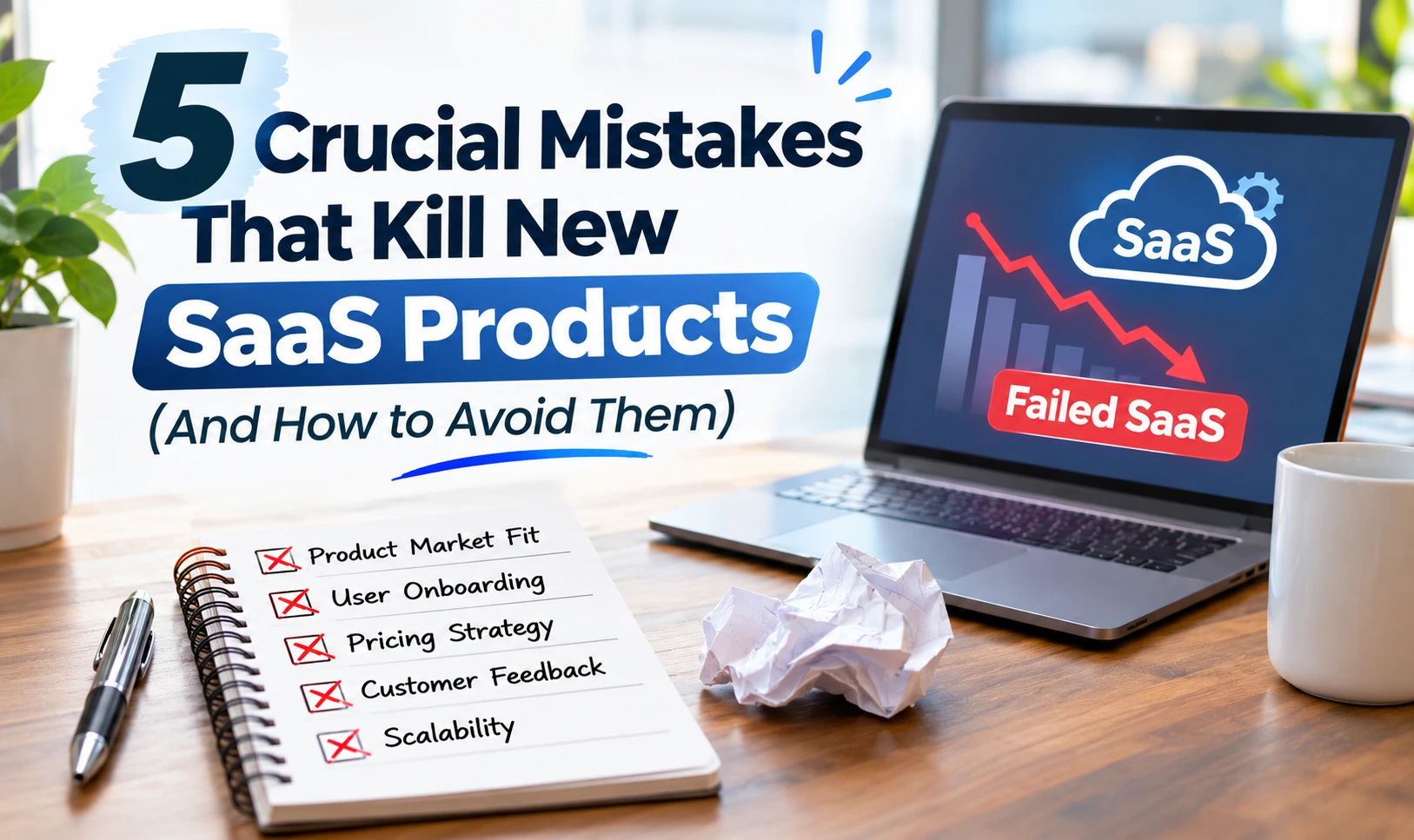
The creation of a SaaS product goes beyond coding the software and putting it online. Companies have to realize what clients want, implement beneficial features, perform well, and provide an incentive to keep using the software. A technically good solution might fail if it fails to address any issue.
There are numerous start-ups that put huge efforts into coding without verifying if there is really a need for their solutions among clients. Others go live with complex features, bad onboarding process, or incorrect pricing.
Working with an experienced SaaS product development company can help businesses make better decisions throughout the development process. Understanding common mistakes early can also save development costs and prevent avoidable problems after launch.
1. Building Without Validating Market Demand
One of the biggest mistakes founders make is developing a product based on assumptions rather than actual customer requirements. An idea may sound useful internally, but that does not mean businesses will pay for it.
For example, a startup might develop an advanced project management platform without checking whether its target customers are satisfied with existing tools. After launch, it may discover that users need simpler reporting features rather than another complete management system.
How to avoid it:
- Interview potential customers before development.
- Research competing products and their limitations.
- Identify problems customers are willing to pay to solve.
- Create surveys and test early product concepts.
- Collect feedback from potential users.
According to CB Insights’ research on startup failures poor product-market fit remains a major reason businesses fail. ASaaS product development company can help translate validated business requirements into a practical product roadmap.
2. Adding Too Many Features to the First Version
The common belief among many entrepreneurs is that starting up with more features helps get more users. But introducing such unnecessary features would cost you time, money and effort.
Your product should not compete with the entire range of services provided by existing platforms; all it should do is address the basic problem of your customer base well enough.
If we take the case of an appointments scheduling platform, for instance, some of the essential features that it might require when just starting out include calendar integration, bookings management and reminders.
How to avoid it:
- Identify the product’s main purpose.
- Separate essential features from future improvements.
- Prioritise features based on customer demand.
- Release improvements in manageable stages.
- Monitor which features customers actually use.
A focused MVP development for SaaS approach allows founders to test the main product idea with real users before investing in additional functionality. Our web development solutions can also be considered when planning a scalable digital product.
3. Ignoring User Experience and Onboarding
Even helpful software will be unable to keep users because of its confusing interface. The new user needs to know how to register in the system, explore the dashboard and perform tasks easily.
For example, think about the accounting SaaS software. The customer cannot connect the bank accounts, upload invoices or create some reports. As a result, he will not use the service.
Poor onboarding can also increase support requests and reduce customer retention.
How to avoid it:
- Keep navigation simple and consistent.
- Provide short onboarding instructions.
- Use clear labels and helpful error messages.
- Test the interface with actual target users.
- Make important features easy to find.
A reliable SaaS product development company should treat usability as part of product planning rather than something to fix after launch. Regular usability testing helps identify problems before they affect a larger customer base.
4. Neglecting Security, Performance and Scalability
SaaS applications manage accounts, company information, and even confidential finance and personal information. Security concerns and poor system performance are detrimental to building trust among customers.
Many companies prioritize getting off the ground and leave crucial technical decisions for later. As a result, issues might arise once the number of users increases or they start storing information.
For instance, a cloud-based inventory management application might work fine for 20 users, but lag for hundreds of employees using it at the same time.
How to avoid it:
- Use appropriate authentication and access controls.
- Encrypt sensitive information.
- Conduct regular security testing.
- Monitor application performance.
- Plan database and infrastructure requirements.
- Maintain backups and recovery procedures.
Professional SaaS development services should account for security, performance and future growth from the beginning. These requirements are especially important for products serving multiple businesses through shared infrastructure.
5. Choosing the Wrong Pricing and Ignoring Customer Feedback
Product launch doesn’t equate to the end of the development cycle. It is important to know whether customers see enough value in the product that they should keep paying for it.
Incorrect pricing will make an otherwise useful product hard to sell. Pricing too high might scare off smaller clients, while too low will create a challenge in covering costs related to the infrastructure and development.
Not heeding customer feedback is also a big mistake. Clients can come back to report missing integrations, confusing features, or technical issues many times.
How to avoid it:
- Research competitor pricing and customer expectations.
- Test different subscription structures.
- Track trial-to-paid conversions.
- Monitor cancellations and renewal rates.
- Collect feedback through surveys and support conversations.
- Prioritise improvements based on recurring customer problems.
An experienced SaaS product development company can help businesses connect product improvements with actual user requirements. Pricing should also be reviewed as the product, customer base and operating costs change.
How to Build a SaaS Product That Can Grow
Avoiding these problems needs an organized development process. The company needs to validate its concept, define the problem facing the customers, and develop based on objectives.
A practical development process includes:
- Research the market: Identify your target audience, competitors and customer problems.
- Define product requirements: Decide which features are necessary for the first release.
- Create a development roadmap: Plan design, development, testing and deployment.
- Test with real users: Collect feedback before expanding functionality.
- Monitor performance: Review user engagement, retention, errors and subscription activity.
- Improve continuously: Use customer feedback and product data to guide updates.
How to Choose the Right Development Partner
Deciding on a development partner is yet another crucial decision that SaaS founders need to make. Besides cost factors, you should consider how well the developers understand your technical needs and whether they can accommodate any future updates and changes. Before choosing your partner, be sure they have experience developing cloud-based software, databases, APIs, secure and user-friendly solutions.
Discuss your product requirements, expected timelines, maintenance needs and ownership of the source code. A capable SaaS product development company should understand your business objectives and explain the technical decisions involved.
Conclusion
Creating a successful software as a service application goes beyond just writing good code. Companies have to validate demand for the product, choose important features, provide easy user experience and think about security and scalability. It is also crucial to hear out the customer’s feedback and re-examine pricing from time to time.
Here at Shag Infotech, we know the importance of matching technical needs with business needs. In our approach to developing SaaS applications, we focus on developing solutions which match the business needs and can be improved in the future. If you are planning to develop a new SaaS product or improve the one you have, contact us!
Frequently Asked Questions
1. Why do new SaaS products fail?
Reasons for new SaaS offerings to fail include bad market research, lack of product-market fit, too many features, complicated usability, security issues, or unreasonable pricing.
2. What is the biggest mistake when building a SaaS product?
Ignoring customer validation when developing is a grave error. The company must be sure that there exists a problem among the customers and they would like to pay for the solution.
3. How does an MVP help SaaS startups?
This is because an MVP provides startups with the chance to release vital features, get feedback from actual users, and validate their product concept.
4. How much does SaaS product development cost?
Fees vary based on product complexity, integration, technology, security needs and development time. Companies must outline their requirements before getting an estimate.
5. When should a business hire a SaaS development partner?
Businesses have the option to bring a development partner into the ideation process, technical planning, MVP development or product expansion depending on their own capabilities and needs.