

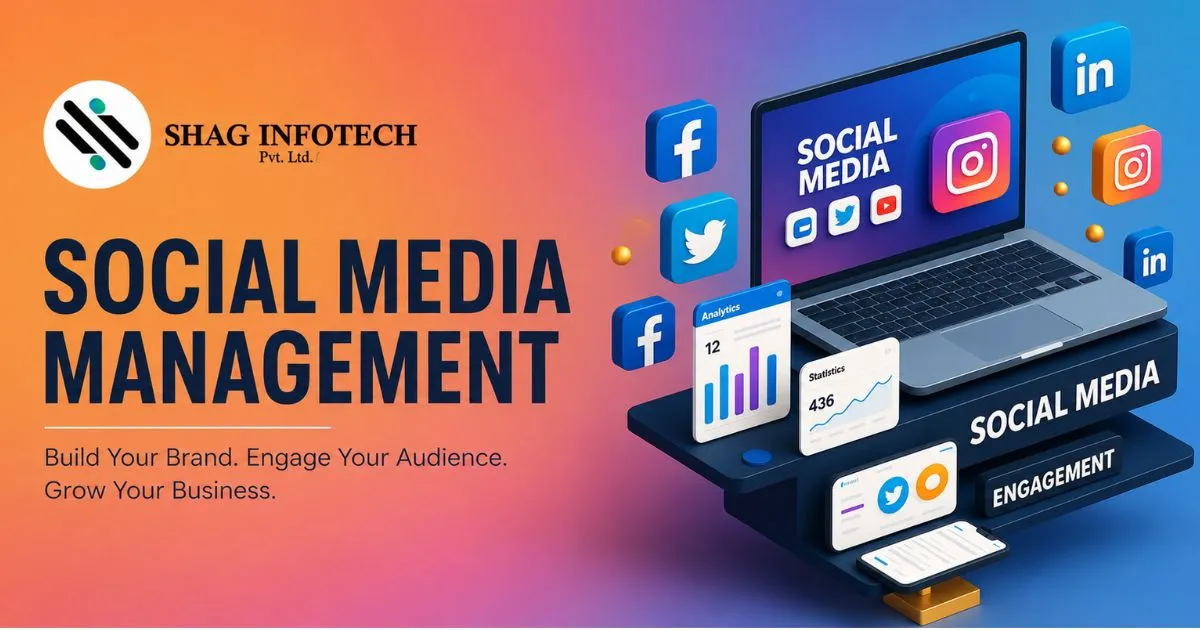
Social media has become an important channel for businesses to communicate with customers, build brand awareness, showcase products, and generate new opportunities. However, managing several platforms consistently requires planning, content creation, monitoring, and regular analysis.
Social Media Management Services help businesses organize these activities through a structured approach. Instead of posting occasionally or handling every task manually, businesses can use professional support to maintain a consistent social presence and focus more on their core operations.
Whether you are a small business, growing brand, service provider, or established company, professional social media management can make your online marketing more organized and measurable.
Key Takeaways
- Consistent social media activity helps maintain brand visibility.
- Professional management can save internal time and resources.
- Regular monitoring can improve audience communication.
- Data and analytics can support better marketing decisions.
- A structured content strategy can improve overall social media performance.
- Professional management can help businesses avoid inconsistent posting and missed opportunities.
Table of Contents
- What Are Social Media Management Services?
- 10 Benefits of Social Media Management Services
- Social Media Management vs. DIY Management
- Best Practices for Social Media Management
- Common Social Media Management Mistakes
- Practical Example
- FAQs
- Final Thoughts
What Are Social Media Management Services?
Social Media Management Services involve planning, creating, publishing, monitoring, and analyzing content across social media platforms. The process can include content calendars, audience engagement, performance reporting, community management, and strategy development.
Depending on the business and service provider, management may cover platforms such as Facebook, Instagram, LinkedIn, X, Pinterest, or other relevant channels.
The goal is not simply to publish more content. Effective management focuses on reaching the right audience with useful, relevant, and consistent communication.
10 Benefits of Social Media Management Services
1. Maintains Consistent Brand Presence
Consistent posting helps customers recognize and remember a business. A planned approach ensures that social profiles remain active instead of becoming inactive for weeks at a time.
Professional management can establish a content calendar around important topics, campaigns, product updates, seasonal events, and audience interests. This makes publishing more organized and reduces last-minute content decisions.
For example, a local service business might schedule educational posts, customer-focused content, service information, and industry updates throughout the month. This creates a more balanced social presence.
2. Saves Time and Internal Resources
Managing social media involves much more than writing captions. Businesses also need to research topics, create visuals, schedule posts, respond to comments, monitor conversations, and review analytics.
Outsourcing these activities can give business owners and internal teams more time to focus on sales, operations, customer service, and other important responsibilities.
This is especially useful for small businesses where one person may otherwise be responsible for several marketing tasks at the same time.
3. Supports Better Content Planning
A structured content strategy helps businesses publish content with a clear purpose instead of posting randomly.
Social Media Marketing Services can support different content objectives, such as educating customers, showcasing products, answering common questions, highlighting company updates, and supporting promotional campaigns.
A monthly content plan can also help maintain a healthy balance between promotional and informational content. This makes the social feed more useful and less repetitive.
4. Improves Audience Engagement
Social media is not only a publishing channel. It is also a place where customers ask questions, share opinions, leave comments, and interact with brands.
Regular monitoring allows businesses to respond to relevant comments and messages in a timely manner. This can make customers feel heard and improve communication.
Social Media Engagement can include responding to comments, answering questions, acknowledging mentions, and participating in relevant conversations. The quality and relevance of interactions matter more than simply trying to increase the number of comments.
5. Helps Build Brand Awareness
A consistent social presence can help businesses introduce their products, services, expertise, and brand personality to potential customers.
A professional Social Media Marketing Agency can help develop content around a brand’s audience, positioning, and business goals. Over time, repeated exposure to useful and recognizable content can help improve brand familiarity.
For example, a technology company might share product education, industry insights, customer stories, and behind-the-scenes content to communicate what makes its brand different.
6. Makes Social Media More Goal-Oriented
Posting content without a clear objective can make it difficult to determine whether social media is contributing to business goals.
A structured management approach connects content with specific objectives such as website traffic, brand awareness, lead generation, customer communication, or product discovery.
Businesses should define measurable goals before selecting content formats and platforms. This makes it easier to evaluate what is working and what needs improvement.
7. Provides Access to Performance Insights
Social platforms provide data about content reach, engagement, audience behavior, clicks, and other performance indicators.
Regular analysis helps businesses understand which topics and formats perform well. Instead of relying entirely on assumptions, marketers can use available data to refine future content.
Important metrics may include:
- Reach and impressions
- Engagement rate
- Profile visits
- Link clicks
- Video views
- Follower growth
- Leads or conversions where tracking is available
The most useful metrics depend on the business objective.
8. Helps Businesses Choose Suitable Platforms
Not every business needs to be active on every social media platform. Managing too many channels can spread resources too thin.
Professional social media management can help businesses focus on platforms where their target audience is most relevant. A B2B company, for example, may prioritize LinkedIn, while a visually driven consumer brand may place greater emphasis on Instagram or Pinterest.
The right platform mix should be based on audience behaviour, content format, resources, and business goals.
9. Creates More Organized Campaigns
Product launches, seasonal promotions, events, announcements, and special offers often require multiple pieces of content.
A social media management process can coordinate these posts around a central campaign message. This creates consistency across captions, visuals, publishing dates, and calls to action.
Businesses can also review campaign performance afterwards to understand which content generated the strongest response.
10. Provides Scalable Support as a Business Grows
As a business expands, its social media requirements often become more complex. There may be more products, campaigns, platforms, customers, and content requirements to manage.
Social Media Management Packages can provide different levels of support depending on business needs. A smaller company may require basic content planning and publishing, while a growing brand may need ongoing community management, analytics, and campaign support.
The important consideration is choosing a service scope that matches the business’s actual goals and resources.
Social Media Management vs. DIY Management
| Factor | DIY Management | Professional Management |
| Content planning | Usually handled internally | Structured content planning |
| Posting consistency | Depends on available time | Scheduled and organized |
| Audience monitoring | May be irregular | Regular monitoring |
| Analytics | Basic or occasional | Regular performance review |
| Strategy | Often reactive | Goal-oriented |
| Scalability | Limited by internal resources | Easier to scale |
DIY management can work for businesses with enough time and expertise. Professional support becomes more useful when social media responsibilities start competing with core business activities.
Best Practices for Social Media Management
To get better results from social media, businesses should focus on quality and consistency rather than simply increasing posting frequency.
Define Your Audience
Understand who you want to reach, what problems they have, what content they find useful, and which platforms they use.
Create a Content Calendar
Plan posts in advance around campaigns, educational topics, product information, industry events, and seasonal opportunities.
Maintain Brand Consistency
Use consistent messaging, visual identity, tone, and basic brand guidelines across platforms.
Monitor Performance
Review metrics regularly and compare results against your original objectives.
Respond Professionally
Treat comments, questions, and customer messages as part of the overall customer experience.
Common Social Media Management Mistakes
Some businesses struggle with social media because they focus on activity rather than strategy. Common mistakes include:
- Posting without a defined objective
- Using identical content on every platform
- Ignoring comments and messages
- Focusing only on promotional posts
- Buying followers instead of building a relevant audience
- Failing to review analytics
- Posting inconsistently
- Trying to manage too many platforms at once
Avoiding these mistakes can make social media activity more focused and sustainable.
Practical Example
Consider a small e-commerce brand that posts only when it has a new product or promotion. Its social profile may appear inactive between campaigns.
With a structured management process, the same business could create a monthly plan that includes product education, customer questions, useful tips, behind-the-scenes content, product demonstrations, and promotional posts.
The business could then review reach, engagement, website visits, and conversions where appropriate. The following month’s strategy could be adjusted based on the results.
This approach turns social media from occasional posting into an organized marketing activity.
Frequently Asked Questions
1. What are Social Media Management Services?
Social Media Management Service help businesses plan, create, publish, monitor, and analyze social media content while maintaining consistent communication with their audience.
2. Are Social Media Management Companies Worth It for Small Businesses?
They can be useful when business owners do not have enough time, expertise, or internal resources to manage social media consistently. The value depends on the business goals and the scope of services required.
3. What does a social media manager do?
A social media manager may handle content planning, publishing, community monitoring, engagement, campaign coordination, performance analysis, and reporting.
4. How often should a business post on social media?
There is no universal posting frequency. The right schedule depends on the platform, audience, content quality, available resources, and business objectives. Consistency is generally more important than posting simply to increase frequency.
5. Can social media management generate leads?
Yes, social media can support lead generation when content, targeting, calls to action, landing pages, and measurement are aligned with the business objective. Results vary by industry, audience, offer, and execution.
6. What should businesses look for in a social media management provider?
Look for clear deliverables, relevant experience, transparent reporting, realistic goals, a defined content process, and a strategy that matches your target audience and business objectives.
7. What are Social Media Management Packages?
Social Media Management Packages are predefined service plans that may include different combinations of content creation, scheduling, platform management, engagement, reporting, and strategy support. Businesses should compare the actual deliverables rather than choosing based only on the number of posts.
Conclusion
Social media can become a valuable business channel when it is managed with consistency, clear objectives, relevant content, and regular performance analysis. From saving internal time to improving audience communication and creating organized campaigns, professional management can provide several practical advantages.
The right approach depends on your audience, industry, platforms, resources, and goals. Instead of trying to be everywhere, focus on the channels and activities that are most relevant to your customers.
If your business needs a structured approach to social media, Shag Infotech can help you build a practical strategy around content, engagement, performance tracking, and long-term digital marketing goals. Get in touch to discuss your social media requirements and choose a management approach that fits your business.