

In today’s highly competitive digital marketplace, businesses need more than a great product or service to succeed. Customers are constantly exposed to countless brands, making it essential for companies to create a memorable and trustworthy presence. This is where a well-planned Branding Strategy becomes a critical business asset.
A strong brand helps businesses establish credibility, attract the right customers, and create lasting relationships. Whether you are a startup, small business, or established company, building a recognizable brand can significantly impact your growth and profitability.
In 2026, branding is no longer limited to logos and colour schemes. Modern consumers expect authentic communication, personalized experiences, and consistent messaging across every touchpoint. Businesses that invest in a structured branding approach gain a competitive advantage and build long-term customer loyalty.
Why Branding Matters More Than Ever in 2026
Consumers today make purchasing decisions based on trust, reputation, and emotional connection rather than price alone. A strong brand helps businesses stand out from competitors while clearly communicating their values, expertise, and commitment to customers.
Effective branding builds customer trust, encourages long-term loyalty, and strengthens market positioning. It also creates meaningful emotional connections that influence buying behavior and increase perceived value. As a result, businesses can improve marketing performance, attract the right audience, and support sustainable growth.
Companies that maintain a consistent brand presence often experience higher customer retention rates, stronger brand recognition, and better conversion rates than those with fragmented branding efforts.
Understanding the Foundation of a Successful Brand
Before developing any branding initiatives, businesses must establish a solid foundation that defines who they are and what they represent.
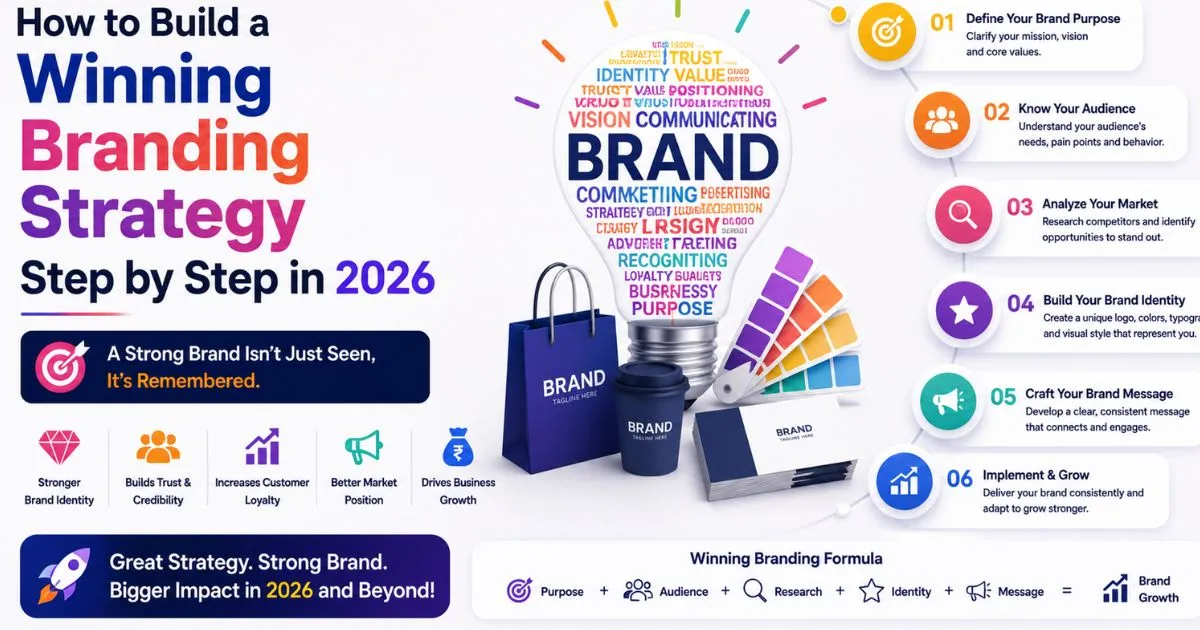
Define Your Brand Purpose
A clear purpose explains why your company exists beyond making profits. It communicates the impact your business aims to create and helps customers connect with your mission on a deeper level.
Establish Core Values
Core values guide business decisions and shape customer perceptions. These principles influence company culture, customer interactions, and long-term business objectives.
Create a Vision Statement
Your vision statement describes where your business aims to be in the future. It provides direction for growth and helps align branding efforts with business goals.
Conduct Comprehensive Target Audience Analysis
One of the biggest branding mistakes businesses make is trying to appeal to everyone. Successful brands focus on understanding specific customer groups and creating tailored experiences.
Identify Customer Demographics
Analyze factors such as:
- Age
- Gender
- Income
- Occupation
- Education
- Location
These insights help businesses create more relevant branding campaigns and messaging.
Understand Customer Pain Points
Identify the challenges, frustrations, and needs your customers experience. Understanding these issues allows businesses to position their services as valuable solutions.
Analyze Customer Behavior
Study how customers interact with brands, make purchasing decisions, and engage online. Behavioral insights improve communication strategies and marketing effectiveness.
Build a Strong Brand Development Strategy
A structured brand development strategy helps businesses create a consistent and memorable identity that resonates with their audience.
Define Your Unique Value Proposition
Your value proposition explains what makes your business different from competitors. It highlights the specific benefits customers receive when choosing your services.
Identify Market Opportunities
Research competitors and industry trends to uncover gaps in the market. These opportunities can help your business stand out and attract underserved customer segments.
Develop Competitive Advantages
Focus on strengths that competitors cannot easily replicate, such as exceptional customer service, specialized expertise, innovative solutions, or unique experiences.
Create an Effective Brand Positioning Strategy
A strong brand positioning strategy helps shape how customers perceive your business in comparison to competitors. It starts with clearly defining your market position, whether your focus is affordability, premium quality, innovation, industry expertise, or exceptional customer experience. A well-defined position improves recognition and creates a consistent brand image.
Businesses should also identify unique features, services, or benefits that differentiate them from competitors and make them more appealing to their target audience. Additionally, clearly communicating your value proposition helps customers quickly understand what you offer and why it matters, ultimately increasing trust, engagement, and customer preference.
Develop a Powerful Brand Identity
A strong brand identity helps customers instantly recognize and remember your business.
Design a Professional Logo
A logo serves as the visual representation of your business. It should be simple, memorable, and aligned with your overall brand personality.
Choose Brand Colors
Colors influence emotions and customer perceptions. Select colors that reflect your brand values and maintain consistency across all platforms.
Select Typography
Typography contributes to visual consistency and readability. Use fonts that align with your brand image and communication style.
Create Visual Guidelines
Brand guidelines ensure all marketing materials follow a consistent visual standard, strengthening recognition and professionalism.
Master the Brand Identity Development Process
The brand identity development process involves creating a cohesive system that communicates your brand consistently.
| Branding Element | Purpose | Business Impact |
| Logo | Visual Recognition | Improves Recall |
| Colors | Emotional Connection | Strengthens Identity |
| Typography | Consistency | Enhances Professionalism |
| Imagery | Storytelling | Improves Engagement |
| Voice & Tone | Communication Style | Builds Trust |
When these elements work together, businesses create stronger customer experiences and improve brand memorability.
Build Clear and Consistent Brand Messaging
Strong brand messaging communicates your value, personality, and promise to customers.
Define Your Brand Voice
Your brand voice should reflect your company personality. It may be professional, friendly, authoritative, innovative, or educational depending on your audience.
Create Key Messaging Pillars
Messaging pillars provide consistency across all communication channels and ensure customers receive a unified brand experience.
Develop a Brand Story
Stories create emotional connections. Share your company’s journey, mission, and customer success stories to build trust and authenticity.
Achieve Long-Term Brand Consistency
Maintaining brand consistency across all channels is essential for improving customer recognition, building trust, and creating a professional brand image. Businesses should ensure that their websites, advertisements, emails, presentations, and social media content follow the same branding guidelines to deliver a unified experience. Internal teams must also understand the brand’s values, voice, and messaging so they can represent the business consistently in every customer interaction.
Additionally, regularly monitoring branding performance helps identify areas for improvement, maintain alignment with business goals, and ensure the brand remains relevant and effective over time.
Strengthen Your Visual Branding
Effective visual branding plays a crucial role in creating memorable impressions and strengthening customer engagement. A professionally designed website should reflect your brand’s personality while offering a seamless user experience that helps visitors easily achieve their goals. Consistency across social media platforms is equally important, as using the same colors, imagery, and design elements improves recognition and reinforces brand familiarity.
Additionally, investing in high-quality visual content such as graphics, videos, and photography enhances credibility, builds trust, and positively influences how customers perceive your business, ultimately contributing to stronger brand awareness and long-term growth.
Implement Effective Strategic Brand Management
Strategic brand management ensures your brand remains relevant, competitive, and consistent as market conditions evolve. By continuously monitoring performance and customer expectations, businesses can strengthen their brand presence and support long-term growth.
Monitor Market Trends
Consumer preferences and industry trends change regularly. Businesses should stay informed and adapt their branding efforts while maintaining their core values and identity.
Measure Brand Performance
Track important metrics such as:
- Brand awareness
- Website traffic
- Customer engagement
- Conversion rates
- Customer retention
These insights help businesses evaluate branding effectiveness and make informed improvements.
Refine Brand Experiences
Customer expectations continue to evolve. Regularly improving interactions across all touchpoints helps strengthen loyalty, enhance satisfaction, and maintain a strong market position.
Prioritise Brand Reputation Management
A positive reputation plays a major role in influencing customer purchasing decisions and building long-term trust. Encouraging authentic customer reviews helps showcase real experiences and provides valuable social proof for potential buyers. Businesses should also respond professionally to both positive and negative feedback, demonstrating transparency and a commitment to customer satisfaction.
Additionally, maintaining honest communication and consistently delivering high-quality products or services strengthens credibility, improves customer relationships, and supports long-term business success in an increasingly competitive marketplace.
How Branding Services Help Businesses Grow Faster
Professional branding services provide businesses with the expertise needed to develop a strong market presence.
Benefits include:
- Strategic planning
- Professional brand development
- Market research
- Identity creation
- Messaging development
- Reputation management
- Performance monitoring
Businesses that invest in expert branding support often achieve stronger visibility and sustainable growth.
Conclusion
Building a successful brand in 2026 requires much more than designing a logo or selecting colors. Businesses need to understand their customers, define a clear market position, create a memorable identity, maintain consistency across all channels, and actively build trust over time.
A well-planned approach helps companies strengthen customer relationships, improve recognition, and stand out in competitive markets. By focusing on clear communication, a unique value proposition, consistent visual elements, and long-term reputation building, businesses can create a strong market presence and achieve sustainable growth for years to come.
FAQ Section
1. What is a Branding Strategy?
A Branding Strategy is a long-term plan that defines how a business presents itself, communicates with customers, and differentiates itself from competitors.
2. Why is brand positioning important?
Brand positioning helps customers understand what makes your business unique and why they should choose your services over competitors.
3. How does brand identity affect business growth?
A strong brand identity improves recognition, trust, customer loyalty, and overall marketing effectiveness.
4. What is the role of brand messaging?
Brand messaging communicates your value proposition, mission, and personality to customers in a clear and consistent way.
5. How can businesses improve brand recognition?
Businesses can improve brand recognition through consistent messaging, professional visuals, quality customer experiences, and ongoing marketing efforts.