


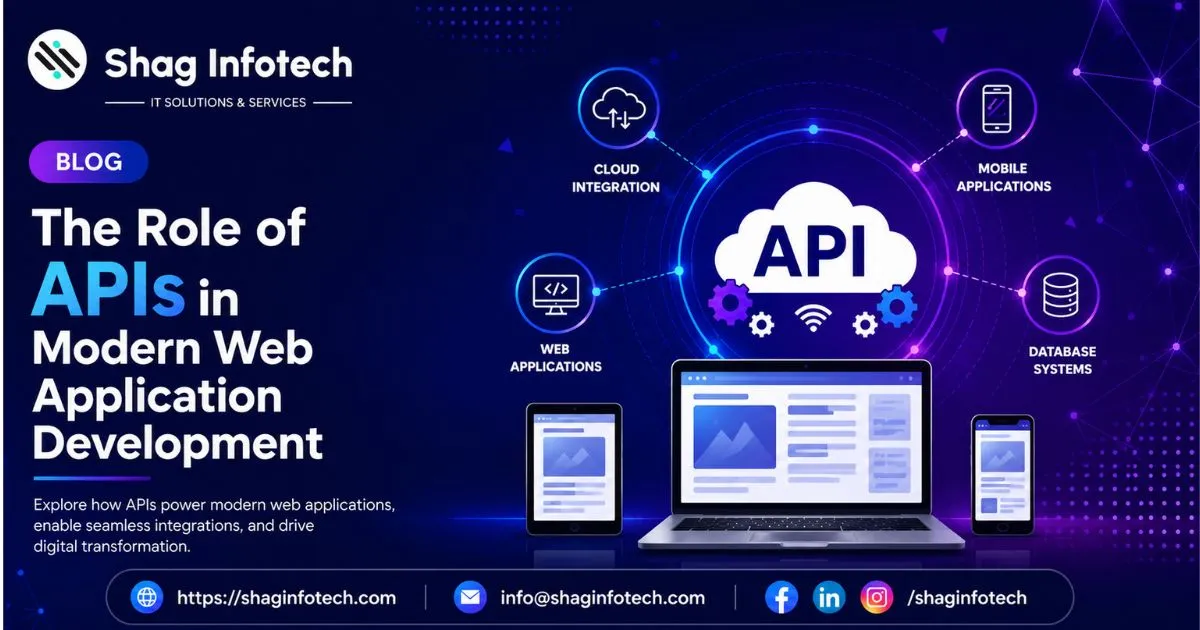
Businesses today expect web applications to be faster, smarter, and capable of connecting with multiple digital services. Whether it’s an eCommerce platform processing payments, a healthcare portal retrieving patient records, or a travel website displaying live flight information, APIs make these interactions possible. Without APIs, developers would have to build every feature from scratch, increasing both development time and costs.
Modern Web Application Development relies heavily on API development services to connect applications with databases, cloud platforms, payment gateways, authentication systems, and third-party tools. APIs simplify communication between different software applications while improving scalability, security, and user experience.
As businesses continue their digital transformation in 2026, organizations are increasingly investing in API integration, automation, and cloud-native architectures to remain competitive. Understanding the role of APIs helps businesses choose the right technology strategy, improve operational efficiency, and accelerate innovation.
What is API in Modern Web Application Development?
An Application Programming Interface (API) enables different software applications to communicate and exchange data securely. In Modern Web Application, APIs connect web applications with third-party services such as payment gateways, cloud platforms, social media, and databases. This allows developers to add advanced features quickly, improve application performance, reduce development time, and create scalable, secure, and user-friendly web applications without building every functionality from scratch.
Why APIs Matter in 2026
Digital businesses are becoming increasingly interconnected. Customers expect applications to provide instant access to services, personalized experiences, secure transactions, and real-time updates.
This growing demand has made APIs one of the most valuable building blocks of web development.
Key reasons APIs are essential in 2026 include:
- Faster product launches
- Cloud-native application architecture
- Mobile-first development
- AI-powered services
- Microservices adoption
- Better customer experiences
- Easy third-party integrations
- Improved scalability
Organizations no longer build every feature internally. Instead, they integrate trusted external services through APIs, reducing costs while increasing development speed.
What is an API?
An Application Programming Interface (API) is a set of rules that allows two software systems to communicate with each other.
Think of an API as a waiter in a restaurant.
- The customer places an order.
- The waiter delivers it to the kitchen.
- The kitchen prepares the food.
- The waiter brings the food back.
Similarly:
- Your application sends a request.
- The API forwards the request.
- Another service processes it.
- The API returns the response.
This communication happens within milliseconds.
Key Benefits of APIs
1. Faster Development
Using pre-built services eliminates the need to develop every functionality from scratch. Businesses achieve faster development while reducing engineering effort.
Examples include:
- Login with Google
- Google Maps integration
- Stripe payment gateway
- SMS verification
- Email services
2. Better Scalability
Modern applications experience changing traffic patterns.
APIs enable developers to add new features independently without rebuilding the complete application.
This flexibility makes scaling significantly easier.
3. Improved Security
Rather than exposing internal databases directly, APIs provide controlled access using:
- Authentication
- Authorization
- API keys
- OAuth
- Rate limiting
- Encryption
These security mechanisms help protect sensitive business and customer data.
4. Enhanced User Experience
Users expect applications to deliver information instantly.
APIs support:
- Real-time notifications
- Live tracking
- Instant payments
- Weather updates
- Currency exchange
- AI chatbots
The result is a smoother and more engaging user experience.
5. Seamless Third-Party Integration
Businesses often depend on external platforms.
Using api integration in web apps, developers can easily connect:
- Payment gateways
- CRM software
- ERP systems
- Shipping providers
- Analytics platforms
- Marketing automation tools
This reduces manual work while improving operational efficiency.
Enhancing Web Applications Through API Integration
API integration enables web applications to connect with third-party services like payment gateways, cloud platforms, Google Maps, and chatbots. It improves functionality, enhances user experience, supports faster development, and helps businesses build scalable, efficient, and feature-rich web applications.
Types of API Integration for Modern Web Application Development
- Third-Party APIs: Third-party APIs connect your web application with external platforms and services such as payment gateways, social media, mapping tools, and cloud applications. They help developers add advanced features without building them from scratch.
- Internal APIs: Internal APIs are designed for communication between different modules or services within the same organization. They enable secure data sharing, improve system efficiency, and simplify the management of complex web applications.
- RESTful APIs: RESTful APIs are the most widely used API architecture for web applications. They are lightweight, scalable, and easy to integrate, making them ideal for building secure and high-performance web services.
- GraphQL APIs: GraphQL APIs allow applications to request only the specific data they need, reducing unnecessary data transfer. This improves performance, speeds up response times, and creates faster, more responsive web applications.
Building Modern Web Applications with an API-Driven Architecture
Today, API-driven development has become a preferred approach for building scalable and flexible web applications. It enables developers to create modular systems, accelerate development cycles, and simplify maintenance by allowing different services to communicate efficiently through APIs.
Why API-Driven Architecture is Effective
- Separation of Concerns: Different components of a web application can be developed, updated, and maintained independently without affecting the entire system.
- Faster Time-to-Market: Reusable APIs reduce development effort, enabling teams to deliver high-quality web applications more quickly.
- Scalability: An API-driven architecture supports seamless expansion, making it easier to scale applications as business requirements and user demands grow.
Best Practices for API Integration
Businesses investing in api integration services should follow these best practices:
- Use HTTPS encryption
- Implement OAuth authentication
- Maintain detailed API documentation
- Version APIs properly
- Limit request rates
- Validate user input
- Monitor API performance
- Automate testing
Following these practices ensures secure and reliable integrations.
The Role of APIs in Modern Web Application Development
APIs are the foundation of Modern Web Application Development, enabling seamless communication between applications, services, and platforms. They support modular architectures that improve scalability, performance, and flexibility. By integrating APIs, businesses can build future-ready web applications that easily adapt to changing technologies and user requirements.
Simplifying Complex Functions
APIs simplify development by allowing developers to reuse existing services instead of building every feature from scratch. This reduces coding effort, shortens development time, and makes the process of creating modern web applications more efficient.
Streamlining Cross-Platform Functionality
Today’s web applications must perform consistently across desktops, smartphones, and tablets. APIs enable seamless communication between different platforms, ensuring a smooth and consistent user experience regardless of the device.
Supporting Flexibility and Scalability
Using APIs in web development allows developers to update or modify individual application components without disrupting the entire system. This flexible approach makes applications easier to maintain and scale as business needs evolve.
Real-Time Data and Automation
Through developing API solutions, web applications can access real-time data from external services such as weather updates, payment gateways, product inventories, and analytics platforms. APIs also automate repetitive processes, improving efficiency and accuracy.
Microservices and APIs
Modern applications increasingly rely on microservices architecture, where independent services work together through APIs. This approach improves development speed, simplifies maintenance, and enables organizations to scale individual services without affecting the complete application.
Enhancing User Engagement with Third-Party APIs
Third-party APIs help businesses add advanced features like social media login, online payments, maps, live chat, and AI-powered tools. These integrations enhance user engagement while reducing development time and costs.
Strengthening Security
APIs enhance security by controlling how data is exchanged between applications and servers. Features such as authentication, authorization, encryption, and secure API protocols help protect sensitive information and reduce the risk of unauthorized access.
Choosing the Right API Development Partner
When selecting a best api development company, consider:
- Technical expertise
- Industry experience
- Security standards
- API documentation quality
- Post-launch support
- Cloud integration capabilities
- Performance optimization
- Transparent pricing
Businesses should also evaluate previous projects and client testimonials before making a decision.
When Should You Hire an API Developer?
Organizations often hire api developer professionals when:
- Building SaaS platforms
- Creating mobile applications
- Integrating payment systems
- Developing enterprise software
- Migrating legacy systems
- Implementing cloud-native solutions
Experienced developers ensure APIs are secure, scalable, and optimized for long-term growth.
Expert Insight
Rather than viewing APIs as simple connectors, businesses should treat them as strategic digital assets. Well-designed APIs improve collaboration between systems, accelerate innovation, and create opportunities for future integrations without major redevelopment.
Key Takeaways
- APIs enable seamless communication between software systems.
- They reduce development time and costs.
- API integration improves scalability and flexibility.
- Secure APIs protect sensitive data.
- Businesses can expand functionality through third-party services.
- Microservices architecture depends heavily on APIs.
- Choosing experienced API developers ensures long-term success.
Conclusion
As businesses continue embracing digital transformation, APIs remain one of the most important technologies powering connected applications. From payment gateways and cloud services to AI tools and enterprise software, APIs simplify communication while improving performance, security, and scalability.
Whether you’re planning a new project or upgrading an existing platform, investing in high-quality API design and integration is essential for successful Modern Web Application Development. A well-planned API strategy helps businesses innovate faster, deliver better customer experiences, and remain competitive in an increasingly connected digital world.
FAQ
1. What is Modern Web Application Development?
It is the process of building scalable, cloud-based applications using modern technologies like APIs and microservices for better performance and flexibility.
2. Why are APIs important in web development?
APIs connect different software systems, allowing them to share data and work together smoothly in real-time.
3. What are API development services?
These services include designing, building, and maintaining APIs that enable seamless integration between applications.
4. What is API integration?
It is the process of connecting different applications or systems using APIs to enable data exchange and functionality sharing.
5. How do APIs improve performance?
APIs reduce development time and allow reusable components, making applications faster, scalable, and more efficient.
6. What is API-driven development?
It is an approach where APIs are the core foundation of building modern applications instead of traditional monolithic systems.
7. What are common types of APIs?
REST, GraphQL, SOAP, and WebSocket APIs are commonly used depending on performance and security needs.
8. How much do API development services cost?
Costs vary based on complexity, ranging from basic APIs to enterprise-level systems requiring advanced security and scaling.
9. Why is API integration important in web apps?
It helps connect third-party services like payments, maps, and CRMs to improve functionality and user experience.
10. How to hire API developer?
Look for developers with experience in backend systems, API security, cloud platforms, and scalable architecture design.