

Launching a D2C brand is not simply about building an e-commerce site; you require a website from which customers can view, pay for, and purchase products easily. The website you choose will impact the ease with which you conduct such activities.
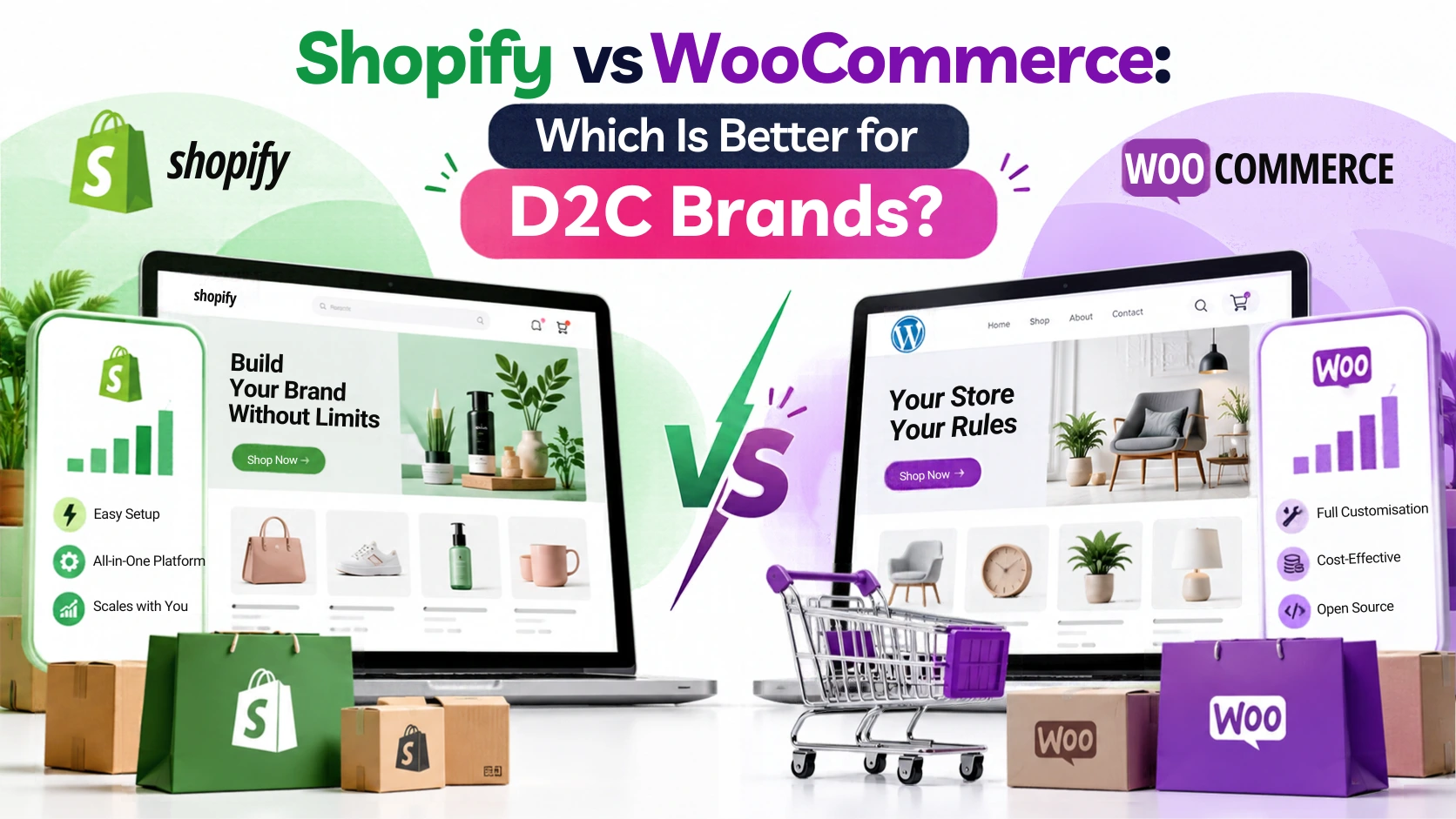
Shopify and WooCommerce are the most used eCommerce systems among many. They both have a system to sell your products online, although their charges, maintenance, and customization vary greatly. Shopify is an all-in-one hosted platform that comes with ecommerce capabilities whereas WooCommerce leaves more control to the business.
If you are considering working with a Shopify development agency, understanding these differences can help you make a better decision.
Understanding Shopify and WooCommerce for D2C Brands
Shopify is a hosted eCommerce platform that allows businesses to create and manage online stores without arranging separate website hosting. It includes tools for product management, payments, orders, and inventory. Businesses can use ready-made themes or choose professional Shopify store development for specific design and functionality requirements.
WooCommerce is an open-source eCommerce plug-in developed for WordPress. This plug-in allows a business to develop its own store while having the ability to manage the hosting, website files, and functions. WooCommerce works well for businesses that are currently operating on WordPress or need to customize their websites. Both of these platforms work well for D2C business.
Shopify vs WooCommerce: Key Differences
Before choosing a platform, compare the features that directly affect your store’s operations.
| Features | Shopify | WooCommerce |
| Setup | Easier for beginners | Requires WordPress setup |
| Hosting | Included | Purchased separately |
| Pricing | Subscription-based | Free core plugin, additional costs |
| Customisation | Themes, apps, and development tools | Extensive code-level flexibility |
| Maintenance | Core platform managed by Shopify | Managed by store owner or provider |
| SEO | Built-in SEO features | WordPress SEO tools and plugins |
| Payment Options | Supported payment integrations | Multiple gateway extensions |
| Scalability | Hosted infrastructure | Depends on hosting and optimisation |
| Best Suited For | Brands wanting simpler management | Brands requiring greater technical control |
It is evident from the comparison that Shopify places emphasis on convenience, while WooCommerce allows more flexibility regarding technology.
Shopify vs WooCommerce: Detailed Comparison
Here’s a detailed comparison of Shopify and WooCommerce to help D2C brands choose the right platform.
1. Ease of Setup and Store Management
It is easy to configure Shopify platform as well. It lets owners choose themes, upload their products, specify payment terms, and start configuring their store for future visitors. All store management tasks are merged into one panel at Shopify platform.
For WooCommerce, it is necessary to install WordPress, configure hosting and plugins. For those who are accustomed to WordPress, it is easy to use WooCommerce, but for the beginners, it might take some time. In this situation, Shopify can be a better option for D2C brands.
2. Pricing and Long-Term Costs
Shopify is based on a subscription plan, which includes everything except extra applications and themes, payment process, and development that will lead to more costs.
The WooCommerce plugin is available for free, but hosting, domain name registration, and premium plugins/extensions cost money.
According to WooCommerce’s official documentation, expenses can also include maintenance, security updates, and performance improvements.
Neither option is necessarily less expensive. Operating cost comparisons should be done beyond just the purchase price.
3. Website Design and Customisation
Store design influences how customers discover products and complete purchases. Shopify provides ready-made themes that businesses can customise according to their branding requirements. For more specific needs, Shopify custom theme development allows businesses to create tailored layouts, product pages, navigation menus, and shopping experiences.
WordPress Themes, Plugins and Customization can give you amazing designing capabilities using WooCommerce. However, some advanced customization may require developer skills. In case, you wish to have an exclusive design for your store without worrying about the server management, then you can go for Shopify.
4. SEO and Content Marketing
Both platforms support search engine optimisation. Shopify allows businesses to edit page titles, meta descriptions, image alt text, and product URLs within its platform’s structure.
WooCommerce can benefit from WordPress’s content management capabilities as well as from SEO plugins. For instance, one could write about their products in blogs within the platform that they use – either WooCommerce or WordPress.
SEO success depends on such factors as the quality of content, website structure, performance, and competition.
5. Payment Gateways and Checkout
An easy checkout experience enables customers to make purchases easily. The checkout experience is provided by Shopify, which supports payment providers according to the merchant’s geographic location and eligibility. WooCommerce offers merchants the ability to choose payment gateways through available extensions.
Indian D2C brands must consider the availability of payment gateways, support for UPI, and other factors before opting for either platform.
6. Security and Website Maintenance
Shopify manages its hosting infrastructure, core platform updates, and several important security responsibilities. This reduces the technical maintenance required from store owners. WooCommerce businesses must arrange secure hosting, backups, plugin updates, and ongoing website monitoring.
Poorly maintained plugins or outdated software can introduce security problems. For businesses without dedicated technical support, Shopify’s managed environment may be more convenient.
7. Scalability and Business Growth
D2C brands may begin with a small product catalogue and later introduce additional products, markets, or sales channels. Shopify provides hosted infrastructure and tools for inventory management, marketing integrations, and international selling.
WooCommerce can also support growing businesses, but performance depends on hosting capacity, website optimisation, and plugin management. A growing brand should consider expected traffic, product volume, integrations, and future development requirements before selecting a platform.
Which Platform Should D2C Brands Choose?
Shopify is ideal for brands that prefer easy store management, managed hosting, and less technology-related work. WooCommerce would suit businesses that use WordPress and need to have full control of their websites.
Before deciding, consider your development budget, payment requirements, marketing plans, and available technical support. A Shopify D2C agency can help businesses evaluate their store requirements and plan suitable design, integrations, and development features.
Role of a Shopify Development Agency in D2C Growth
Selecting Shopify is just the first thing to do. Your online store must also offer an easy shopping experience for your customers. A Shopify development agency can help you set up the store, customize themes, organize products, integrate payments, and optimize for mobile.
At Shag Infotech, we concentrate on helping businesses design their digital solutions based on their needs. A proper development strategy should consider usability and website efficiency above all else.
Conclusion:
Shopify and WooCommerce both offer useful features for D2C businesses. Shopify suits brands seeking easier management, while WooCommerce offers greater control over technical customisation.
Your decision should reflect your budget, store requirements, and long-term plans. Working with a Shopify development agency can help you plan a store that supports your business operations and customer needs.
Ready to Build Your D2C Store with Shopify?
Design an online shopping site that represents your brand and makes things easy for your consumers. Shag Infotech can assist you in Website Design, eCommerce solutions, SEO, and Digital Marketing services.
🌐 Website: https://shaginfotech.com/
📧 Email: info@shaginfotech.com
📞 Phone: +91 70739 63323
Contact Shag Infotech today to discuss your Shopify store development requirements and plan an eCommerce website tailored to your D2C business.
Frequently Asked Questions (FAQs)
1. Is Shopify better than WooCommerce for D2C brands?
It is often easy to operate Shopify, but WooCommerce offers more technical flexibility.
2. Is WooCommerce cheaper than Shopify?
WooCommerce has a free core plugin, but hosting, extensions, maintenance, and development can increase overall costs.
3. Can Shopify handle a growing D2C business?
Yes, Shopify does cater to increasing product listings, sales channels, and integration capabilities based on the plan chosen.
4. Is Shopify good for SEO?
Yes, Shopify supports important SEO features, including editable metadata, product descriptions, image alt text, and redirects.
5. Why hire a Shopify development agency?
Shopify Development Agency can assist organizations in developing personalized and functional websites with suitable integrations.