


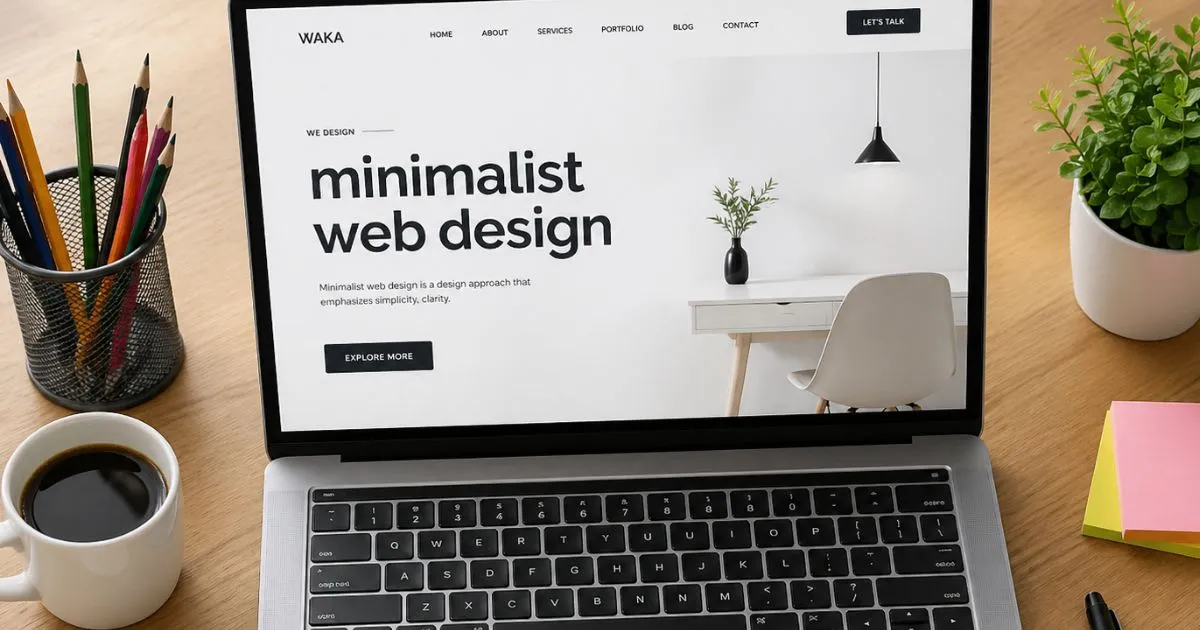
Users today expect websites to deliver three essential features, which include clean designs, fast performance, and easy navigation through their content. Minimalistic web design functions as the most important element of this requirement. The design approach maintains essential functions through its design, which removes all elements that do not contribute to vital functions. Users experience an uninterrupted browsing session because the minimalist design approach prevents designers from using excessive visual elements or creating complicated website structures.
A well-designed minimalist website provides both visual appeal and operational efficiency. The system improves user experience through three different benefits, which include better reading ability, faster loading speed, and improved overall performance. The process of building a personal portfolio, business website, or online platform will benefit from the implementation of minimalist design principles.
For beginners, understanding how to create such a website might seem challenging at first. However, by following the right design principles and focusing on essential elements, anyone can build a professional-looking site. This guide explains everything step-by-step, from understanding the basics to implementing practical techniques. Users will discover the capital ways in which minimalist web design can be effectively implemented in order to keep user engagement and performance on board.
What is Minimalist Web Design?
Minimalist web design exists as a design philosophy which values both essential elements and functional design elements. The process requires designers to eliminate all nonessential components while concentrating on essential elements which enhance website usability and user comprehension. The interface design aims to create a clean user experience which directs users through the interface without showing any visual interruptions.
This design style relies heavily on proper website architecture, structured layouts, and clear visual hierarchy. Instead of using too many colours, fonts, or graphics, it uses a limited colour palette, simple typography, and strategic spacing.
A minimalist approach does not mean boring or empty. The design process requires a planned design because every component must have a specific function. Strong design principles, together with UX Design Principles, enable designers to build websites that combine aesthetic beauty with functional performance.
Why Choose Minimalist Web Design?
Improved User Experience
A clean layout in Minimalist Web Design helps users navigate easily without confusion. The website design enables users to reach their desired content. The system allows users to navigate content easily, which creates a better user experience and decreases bounce rates while users remain on the site for extended periods.
Faster Loading Times
Minimalist websites use only lightweight elements, which include small images and basic scripts. The site achieves better loading speed because it uses fewer heavy elements. Websites that load quickly provide user satisfaction while improving their search engine optimization rankings and their total website effectiveness.
Enhanced Readability
IWeb Design, proper typography, spacing, and structured layouts boost the legibility of the content. Public information becomes easier to understand through the use of clean fonts with proper font sizes, which allow users to read without interruptions. The content becomes more accessible because people can understand it better when they view it on various devices.
Better User Engagement
The structured design, which follows UX Design Principles effectively, attracts user attention. The design creates a distraction-free environment, which enables visitors to concentrate on essential content and their calls to action. The website design increases user interaction because it leads users to visit additional pages, which results in better overall user engagement.
Mobile-Friendly Design
Minimalist layouts naturally adapt to different screen sizes. The way a website functions with basic website design and fewer elements and adaptable grid systems enables it to achieve high levels of responsiveness. Modern users require websites to deliver the same experience across mobile devices, tablet devices, and desktop computers.
Stronger Visual Focus
The designers of Minimalist Web Design use a restricted colour scheme together with intentional spacing techniques to emphasize important elements, which include headings and calls to action. This results in a clear visual hierarchy that leads users into significant areas while rendering better conversion rates without making the users feel inundated.
Step-by-Step Guide to Create a Minimalist Website
The section describes the complete procedure which enables beginners to build their first minimalist website through its design and development until its final optimization.
Step 1: Define Purpose and Goals
You need to establish website goals before starting the actual website creation process. The website requires a decision about its purpose, which includes either business use, blogging, or portfolio presentation. The web design process requires designers to define particular design objectives which will direct their design work and content production work to create a website that fulfils its main purpose.
Step 2: Plan Website Architecture
Website architecture defines the organization and structural arrangement of web pages throughout a site. A good structure ensures easy navigation and a smooth user experience. The design requires users to operate a straightforward layout, which eliminates extra pages while using well-defined menus to find information. Proper planning improves usability and makes the website more user-friendly.
Step 3: Create Wireframes
Wireframes serve as basic visual designs which display a website’s appearance before actual website development begins. The blueprints serve as design documents which assist designers in creating website page layouts. Designers can use Figma as a tool to create wireframes through its user-friendly design interface. To achieve a professional appearance, designers must place their main elements at optimal design locations.
Step 4: Choose the Right Platform
Choosing the ideal platform for novices is critical:
WordPress – Easy to use and flexible
Webflow – Great for design-focused users
Both platforms support minimalist design effectively.
Step 5: Use a Limited Colour Palette
Stick to a small set of colours to keep the design clean and balanced. Neutral shades combined with one accent colour help create a modern look and support a strong minimalist approach. This also improves visual clarity and keeps the interface simple and professional.
Step 6: Focus on Typography
Typography plays an important role in design principles and overall website quality. The use of simple, readable fonts helps to make text more understandable to readers. User engagement improves when designers use proper spacing techniques and maintain consistent font styles throughout their work.
Step 7: Optimize Images and Content
The website should use high-quality images because it needs to maintain performance while avoiding the use of unnecessary heavy files, which impact its speed. The content needs to be presented in clear and concise terms so users can easily understand it. The website needs to maintain an equal distribution of visual elements and textual content because this will enhance its overall performance and user experience.
Step 8: Test and Optimize
The testing process needs to be conducted across multiple devices before the website can be launched. The testing process should assess three key factors, which include loading speed, website responsiveness, and website navigation. The website needs both issue resolution work and performance enhancement work to achieve smooth operation and improved user experience.
Key Elements of Minimalist Web Design
1. White Space
Designers refer to white space as negative space because it serves as an essential element in minimalist design. The design elements create better reading experiences while directing user attention to critical information.
2. Typography
Typography plays a major role in guiding users. The consideration of the font you select and the spacing between words significantly affects readability and a sense of engagement.
3. Colour Palette
The website maintains visual consistency through its use of only essential colors which create design balance throughout. The design achieves harmony through its aesthetic elements, which combine to create a professional appearance that maintains a clean look.
4. Visual Hierarchy
Visual hierarchy establishes element placement according to their significance, which enables users to identify essential information first. The system enhances site navigation and content understanding while improving website performance.
5. Images
The visual appearance of a website improves through high-quality images which maintain a clean design. The content needs to be supported by the elements, which should not create any distractions from the main message.
Common Mistakes to Avoid
Over-simplifying the Design
The website loses its visual appeal because excessive element removal creates an empty space that confuses users. The website becomes less appealing for users because it loses its ability to maintain visual harmony.
Ignoring User Experience
A clean design must always focus on usability. Ignoring user experience can make the website difficult to use and reduce user satisfaction and engagement.
Using Too Many Fonts or Colours
The website’s appearance becomes unprofessional because using different fonts and colours creates visual confusion and breaks design consistency, which conflicts with the minimalist design approach.
Poor Navigation Structure
Without clear navigation, users struggle to find information. Simple pages (or websites) would have to have a well-organized menu, while being structured to introduce a common cyberspace.
Lack of Content Strategy
The minimal design style does not result in reduced content. Information requires meaningfulness, thoughtful planning, and valuable content because these elements help users understand better and maintain their interest.
Tips for Better Minimalist Design
- Focus on clarity over decoration
- Use grid layouts for better alignment
- Highlight important calls to action
- Maintain consistency in design elements
- Keep improving based on user feedback
The businesses that need professional help to design their websites will reach out to a web design company based in Jaipur because they want their websites to achieve both design and performance standards.
Conclusion
The process of developing a minimalist website requires designers to find an equilibrium between maintaining simplicity and providing essential website functions. The structured approach, together with strong design principles and a user-centred design process, helps beginners to create effective websites. The planning process for website architecture, together with content optimization and visual design, works together to create an improved user experience.
A well-executed minimalist web design not only improves performance but also enhances user engagement and readability. The system enables visitors to navigate the website while interacting with its content without facing any interruptions. The guide provides necessary steps and tips which enable anyone to develop a website that shows a clean and modern design with a professional appearance which will make their site stand out in today’s digital world.
FAQ
1. What is Minimalist Web Design?
Minimalist Web Design serves as a design method which creates websites through its three essential elements of simple design, clear design and functional design. The system achieves a better user experience through its design, which eliminates all unneeded elements and displays only vital content.
2. Why is minimalist design important for websites?
The system delivers three major benefits, which include faster loading times, a better reading experience, and improved overall user satisfaction. The clean design of the website enables users to find their way through the content, which leads to higher user engagement.
3. Is minimalist web design good for SEO?
Yes, it improves website speed, mobile responsiveness, and user engagement, all of which are important ranking factors in search engines.
4. What are the key elements of minimalist design?
Key elements include white space, simple typography, a limited colour palette, clear visual hierarchy, and optimized images.
5. Can beginners create a minimalist website?
An individual who is a starter may create a minimalist website with just the necessary tools and follow the step-by-step guide available.
6. How does minimalist design improve user engagement?
The website provides better user interaction when users eliminate distractions to concentrate on its main features because this method leads to improved user engagement and longer session durations.
7. Should I hire a professional for minimalist design?
The hiring of a professional designer or web design company based in Jaipur leads to the creation of a website which delivers advanced features and a highly polished appearance.