

An efficient website must be fast, easy to navigate, mobile-responsive, provide useful content, and have a great user experience. Constant improvements will lead to higher engagement, increased online presence, and sustainable growth of your business.
It is not enough to only have a website in order for it to work efficiently. With the development of technology, changes in customer needs, and changes in search engine algorithm requirements, a lot of companies may need to redesign the processes of their websites in order to improve their performance and user experience.
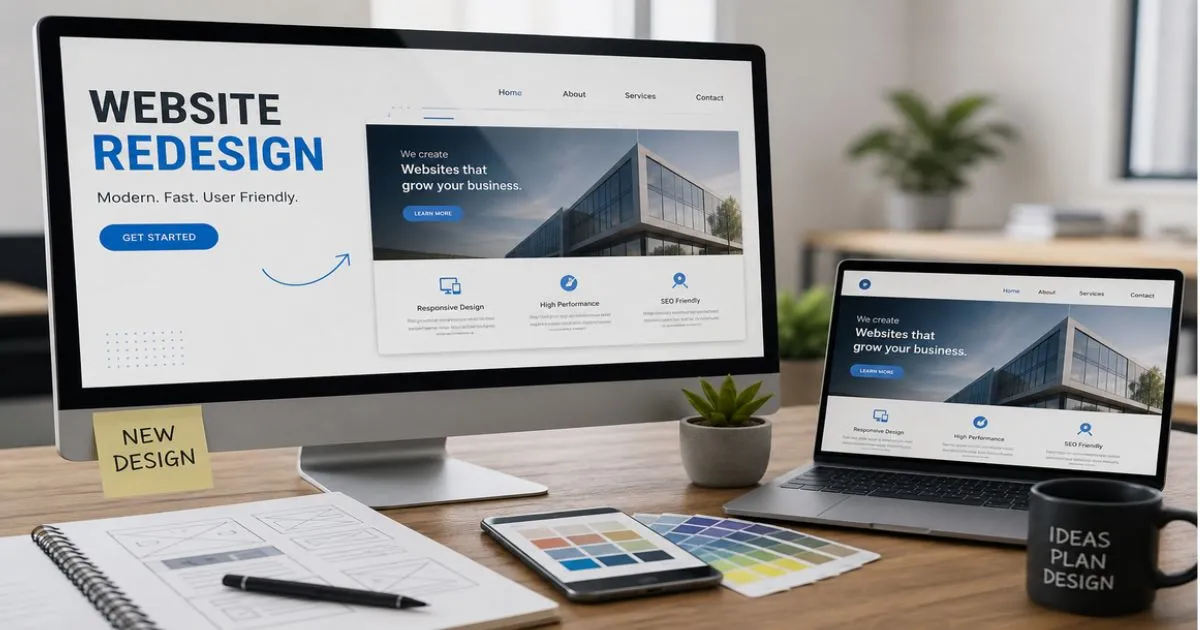
An out-of-date website may harm your brand, website speed, mobile performance, and online visibility. The main goal of modern Website Redesign is to upgrade design, functionality, content organization, and technical performance, bringing your website up to date according to your company’s needs.
The website redesign process should not begin with changing the look of your website. Research, analysis, and planning are needed to understand what works for you and what does not in order to make improvements.
If you are a startup owner, website owner, marketing manager, or e-commerce business owner, the use of the website redesign process may greatly benefit your business.
Key Takeaways
- Website redesign can result in improved website performance and increased conversion chances.
- Website Audit allows recognizing problems before the redesign begins.
- A good website strategy ensures that the new website will help meet business objectives.
- A good plan prevents risks for Website Migration.
- SEO optimization, speed, and mobile optimization are key aspects of any redesign today.
- Website Performance Optimization is crucial for maintaining positive results.
Table of Contents
- What is website redesign?
- Why Businesses Need a Website Redesign
- Benefits of Website Redesign
- Complete 11-Step Website Redesign Process
- Website Redesign Checklist
- Website Redesign vs Website Rebuild
- Best Practices for Successful Redesign
- Common Website Redesign Mistakes
- Real-World Example
- FAQs
- Conclusion
What is website redesign?
Redesigning websites is a strategy of enhancing a website by upgrading it to improve its design, usability, functionality, technical performance, and overall user experience.
Redesigning is more than just adding new colours or designs. It encompasses reviewing the whole website experience through navigation, content arrangement, speed, mobile responsiveness, and search engine optimization, among others.
Most businesses choose to redesign their websites because their platforms fail to meet their growing needs. The outdated platforms usually have bad navigation, poor speed, old branding, and conversion problems, among other challenges.
It is essential to note that redesigning a website requires both creative skills and technical knowledge.
A complete website design checklist usually includes:
- User experience evaluation
- Mobile responsiveness
- Website speed analysis
- SEO review
- Content improvement
- Conversion optimization
- Security checks
- Analytics tracking
Following a checklist ensures that important areas are not missed during the redesign journey.
Why Businesses Need a Website Redesign
Website refresh is important when the current website does not offer a smooth browsing experience, does not meet company goals, or does not provide effective results from search engines.
Customers’ expectations are changing all the time. The website that was considered modern a couple of years ago might become outdated or difficult to use now. Bad design, slow loading time, and complicated navigation can influence the customers’ trust and conversion rate.
A redesign helps businesses address important challenges such as:
Outdated User Experience
Modern users expect websites to be simple, fast, and easy to navigate. Improving Website UX Design helps visitors find information quickly and creates a smoother customer journey.
Poor Search Performance
Search engines consider factors such as website structure, content quality, and technical performance. Conducting a proper Website SEO Audit during redesign helps identify ranking issues and optimization opportunities.
Slow Website Speed
Website speed directly affects user experience. Implementing page speed optimization strategies helps reduce loading time and improve overall performance.
Mobile Usability Issues
With more users browsing through smartphones, businesses need a mobile-friendly website that works smoothly across different devices.
Lack of ScalabilityGrowing businesses often need advanced features, better integrations, and improved functionality. A redesign allows companies to include solutions such as custom web development based on future requirements.
Why Strategic Planning Matters Before Redesign
A good design requires appropriate planning since all the decisions made during the process of designing and developing have to serve some particular purpose.
Effective planning of a website is an important tool for businesses to define their aims, get to know their customers, evaluate competitors, etc.
During planning, businesses should evaluate:
- Current website performance
- Target audience behaviour
- Existing content quality
- Conversion goals
- Technical limitations
- Future growth requirements
Working with an experienced web development company can help businesses create a structured approach that balances design, functionality, SEO, and performance.
A planned redesign reduces unnecessary changes, prevents technical issues, and ensures the final website delivers a better experience for both users and search engines.
Benefits of Website Redesign
The process of website redesign makes it possible for companies to enhance the user experience, achieve higher conversions, increase SEO visibility, and design an expandable website. The web is not only a platform for a company’s online presence but a tool of its operations.
Some major benefits include:
- Improved user experience and easier navigation.
- Better website performance and faster loading speed.
- Increased mobile usability.
- Stronger search engine visibility.
- Higher conversion opportunities.
- Improved brand credibility.
- Better tracking through website analytics.
A redesign also helps businesses adapt to changing customer expectations and modern digital standards.
11-Step Website Redesign Process From Audit to Launch
Creating a new platform from an old website involves research, planning, designing, developing, testing, and optimization. All these steps are equally vital in ensuring the success of the website.
They ensure that the website meets the business goals and provides a great user experience.
Step 1: Conduct a Complete Website Audit
An in-depth audit reveals the current shortcomings and areas where improvements can be made in order to prepare for the redesign process.
The initial phase of this process consists of analysis of the current website.
A complete Website Audit includes:
- Website structure analysis
- Content evaluation
- User experience review
- Technical SEO checking
- Loading speed analysis
- Mobile usability testing
- Conversion performance review
A proper audit prevents businesses from repeating previous mistakes and creates a clear foundation for redesign.
Step 2: Define a Clear Website Strategy
This helps guarantee that all design decisions, content decisions, and development decisions are aligned with business objectives and customer requirements.
Before undertaking any redesign efforts, companies need to understand their goals.
A successful Website Strategy focuses on:
- Business objectives
- Target audience needs
- Conversion goals
- Content requirements
- Competitor analysis
- Future scalability
For example, an e-commerce business may focus on improving product discovery, while a service-based company may prioritize lead generation.
Step 3: Create a Website Planning Process
A structured planning process helps organize design, development, content, and technical requirements before implementation begins.
The website planning process includes:
- Defining website goals
- Creating project timelines
- Assigning responsibilities
- Planning content structure
- Selecting the required technologies
Proper planning reduces delays and ensures smoother execution.
Step 4: Improve Website Architecture
The architecture of a website defines how information is structured and how easy navigation of the site is for both users and search engines.
Good architecture increases usability and enhances SEO results.
During this stage, businesses focus on:
- Clear navigation menus
- Logical page hierarchy
- Internal linking structure
- User-friendly URLs
- Content organization
Improved website architecture helps visitors find information faster and allows search engines to better understand website content.
Step 5: Plan Website UX Design
Effective UX design creates a smooth experience by making websites easier to use, navigate, and interact with.
Modern users expect websites to be simple, responsive, and visually clear.
A professional Website UX Design process includes:
- User journey mapping
- Wireframe creation
- Navigation improvement
- Mobile experience planning
- Conversion-focused layouts
Better UX helps reduce bounce rates and encourages visitors to take desired actions.
Step 6: Develop and Customize the Website
The development stage converts approved designs into a functional website with modern technology, features, and performance improvements.
Businesses may choose solutions such as custom web development when they require unique functionality, integrations, or advanced features.
During development, teams focus on:
- Clean coding practices
- Security implementation
- Responsive design
- Feature integration
- Performance optimization
Working with an experienced web development company helps ensure technical quality and scalability.
Step 7: Optimize Website Performance
Optimization of website performance leads to improved speed and reliability of the website and improved user experience through resolving technical problems.
Slow websites tend to lead to poor user experience and poor conversions.
Important improvements include:
- Image optimization
- Code improvement
- Browser caching
- Server optimization
- Resource management
Businesses should also monitor Core Web Vitals, which measure important user experience factors related to loading speed, interaction, and visual stability.
Step 8: Prepare for Website Migration
Website migration involves safely moving an existing website to a new platform, structure, or design while protecting SEO value and user experience.
A successful Website Migration requires careful planning.
Important migration steps include:
- Backup existing website data
- Maintain URL structure where possible
- Create redirects
- Test functionality
- Monitor traffic after launch
Poor migration planning can result in ranking drops and technical issues.
Step 9: Implement SEO Improvements
SEO optimization ensures that the redesigned website remains visible in search engines and continues attracting organic traffic.
A redesign should include:
- Keyword optimization
- Content improvements
- Technical SEO checks
- Metadata updates
- Internal linking improvements
A complete Website SEO Audit helps identify opportunities before launch and protects existing search performance.
Step 10: Testing Before Website Launch
Website testing ensures that all elements work as intended prior to the launch of the redesigned website. A good testing process will help to highlight any technical, usability, or performance flaws before the launch.
Before publishing the new website, businesses should check:
- Website functionality
- Navigation flow
- Contact forms
- Mobile responsiveness
- Browser compatibility
- Page loading speed
- Security settings
- Tracking implementation
Testing is an essential part of the Website Launch Checklist because even small errors can affect user experience and business performance.
Step 11: Website Launch and Post-Launch Monitoring
A successful launch entails proper planning, monitoring, and improvement of the website once it has been successfully launched. Launching a website is just the beginning, and not the end of the process of optimization.
After launch, businesses should monitor:
- Website traffic performance
- User behavior
- Conversion rates
- Search rankings
- Technical issues
- Website analytics data
Using proper website analytics helps businesses understand visitor behaviour and make data-driven improvements.
A post-launch review ensures that the website continues delivering value and meets business goals.
Website Redesign Process Comparison
| Traditional Approach | Strategic Redesign Approach |
| Focuses only on visual changes | Improves design, performance, and functionality |
| Limited planning | Data-driven planning |
| Ignores SEO impact | Includes SEO optimization |
| Short-term improvements | Long-term growth strategy |
| User needs are overlooked | Customer experience focused |
Complete Website Launch Checklist
A proper checklist helps prevent mistakes during the final launch stage.
| Task | Purpose |
| Test all pages | Ensure functionality |
| Check mobile responsiveness | Improve mobile experience |
| Review SEO elements | Protect search visibility |
| Verify redirects | Maintain SEO value |
| Check page speed | Improve performance |
| Install analytics tracking | Measure results |
| Test forms and CTAs | Improve lead generation |
| Review security settings | Protect website data |
Website Performance Optimization After Launch
Continuous optimization improves website speed, usability, and conversion performance even after the redesign is complete.
A website should be regularly reviewed to maintain strong performance.
Important optimization activities include:
- Monitoring loading speed
- Improving images and media files
- Fixing technical issues
- Updating outdated content
- Testing user journeys
- Reviewing analytics reports
Businesses should focus on improve page speed strategies because faster websites create better user experiences and support stronger engagement.
Common Website Redesign Mistakes to Avoid
Avoiding common redesign mistakes helps businesses protect SEO performance, save resources, and achieve better results from their investment.
Some frequent mistakes include:
Ignoring Existing SEO Value
Removing important pages or changing URLs without planning can affect search visibility.
Focusing Only on Design
A visually attractive website is not enough. Performance, usability, and functionality are equally important.
Skipping User Research
Without understanding customer needs, businesses may create a website that looks good but fails to convert visitors.
Poor Migration Planning
Incorrect Website Migration processes can cause broken links, ranking drops, and technical issues.
Not Testing Before Launch
Launching without proper testing can create negative user experiences.
Best Practices for a Successful Website Redesign
Following proven best practices helps businesses create websites that are user-friendly, search-optimized, and ready for future growth.
Recommended practices include:
- Start with a detailed audit.
- Create a clear strategy before designing.
- Prioritize user experience.
- Maintain SEO during migration.
- Optimize website speed.
- Build responsive designs.
- Track performance after launch.
- Continuously improve based on data.
A successful redesign combines creativity, technology, and business strategy.
EEAT: Building Trust Through Website Redesign
A high-quality redesign should demonstrate Experience, Expertise, Authoritativeness, and Trustworthiness by focusing on real user needs and proven digital practices.
Businesses can improve trust by:
Experience
Show practical understanding of customer challenges, industry requirements, and user behaviour.
Expertise
Use data-driven decisions, technical knowledge, and structured processes during redesign.
Authoritativeness
Create valuable content, maintain professional standards, and demonstrate industry knowledge.
Trustworthiness
Provide secure experiences, accurate information, transparent communication, and reliable website functionality.
A redesign created with EEAT principles helps businesses build stronger relationships with users and search engines.
Practical Example: Website Redesign Impact
A growing e-commerce business noticed that its website had slow loading speed, poor mobile usability, and low conversion rates.
The company started with a complete Website Audit and identified issues related to navigation, performance, and content structure.
During redesign, the business improved:
- Website architecture
- Mobile experience
- Page speed
- Product navigation
- Conversion elements
Following the incorporation of these changes, the site offered an improved experience for its visitors and allowed for more chances to generate sales.
This particular case proves why redesigning the website should be viewed as an investment rather than just a redesign.
Frequently Asked Questions
1. How Often Should You Redesign Your Website?
For the vast majority of companies, a website audit is required to be conducted every 2-3 years or whenever the website stops meeting user expectations, business objectives, or the requirements of search engines.
2. How often should businesses redesign their website?
Most companies tend to think about redesigning their website on a yearly basis or whenever their website no longer serves their users’ needs, due to technological advances, or company growth.
3. How Do You Conduct a Website Audit?
Begin the process by analyzing your website’s efficiency, experience, SEO, content, mobile-friendliness, and general technical status using reliable auditing tools. After that, solve any detected problems and improve your website’s efficiency and search engine ranking.
4. What Should Be Included in a New Website Launch Checklist?
The launch checklist of a new website includes SEO validation, mobile optimization, page loading speed, security issues, content check, setting up analytics, and an extensive functionality test. All these tasks help to ensure that the website will provide users with a good experience.
5. Why is mobile-friendly website design important?
A mobile-friendly website guarantees a good user experience on smartphones and tablets, thus increasing usability and engagement.
6. How can businesses improve website speed?
A business can optimize speed using image optimization, technical optimization, caching, and proper page speed optimization techniques.
7. When Should You Choose a Complete Website Overhaul Instead of Minor Updates?
While minor upgrades enhance particular aspects of a website like its design or content, an overhaul redesigns the entire site, including its infrastructure and performance, for usability.
Conclusion
Website Redesign is not just about refreshing the visuals; it is an advanced method that enhances the website’s user experience, its performance, and SEO ranking.
The process involves going through many steps from audit to launch in order for the organization to be able to build websites that work faster and are more aligned with customers’ needs.
All steps from planning to migration and optimization have their significance in building a digital website of the future.
At Shag Infotech, businesses can build strategic website solutions focused on design, development, SEO, and performance to achieve stronger digital growth.